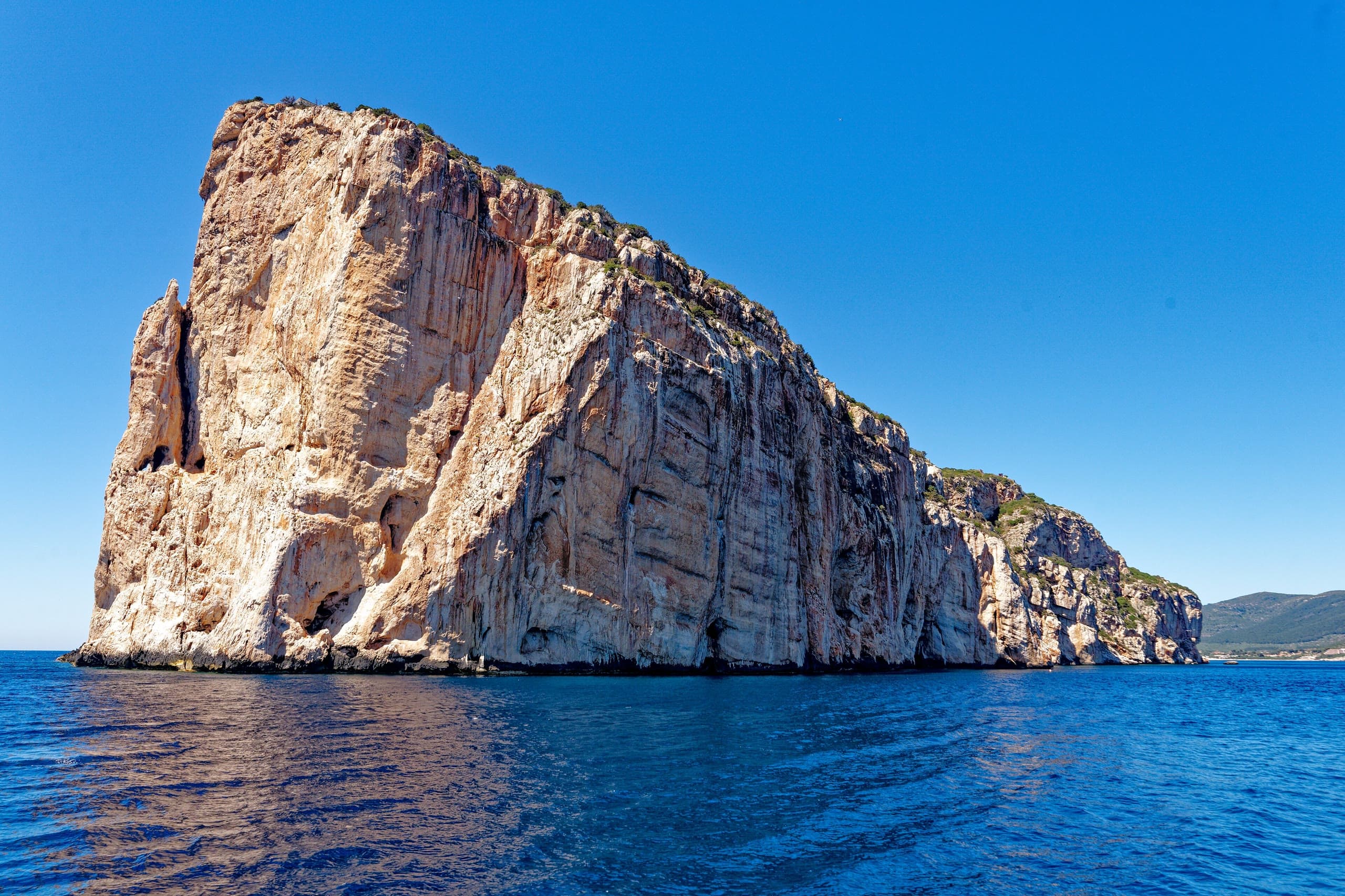
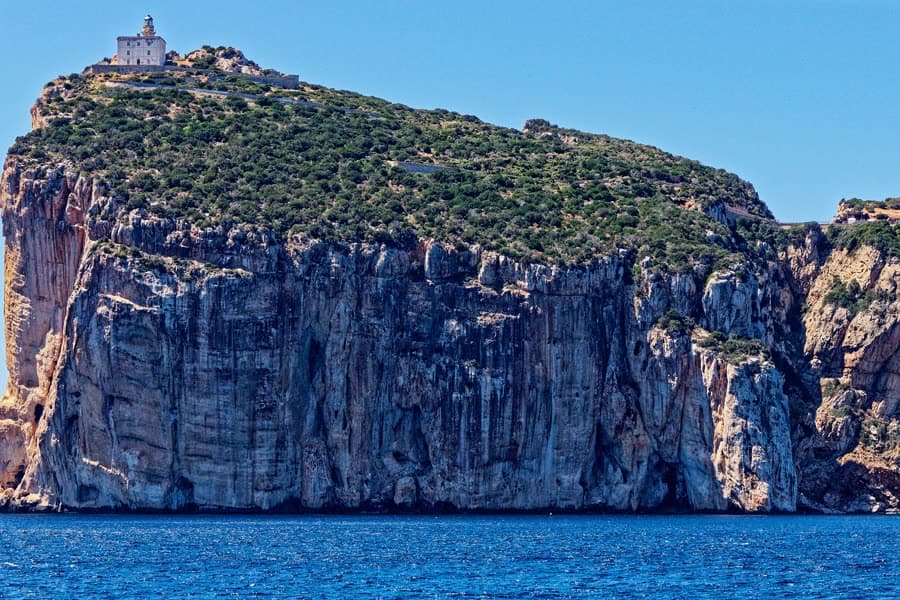
The limestone cliff of Capo Caccia rising straight out of deep blue water, photographed from a boat offshore.

AlgheroOn the water · A l'aigua

Alghero on the water

A l'aigua · 40.56° N 8.32° E

The sea west of town is deep, clear and mostly protected: a marine reserve covers 2,631 hectares and about 36 km of coast. That one fact shapes the rest of this page — where you can dive, where you can anchor, and who needs a permit first.

Photo Holger Uwe Schmitt / Wikimedia Commons, CC BY-SA 4.0

Depth

The coral is deeper than anyone goes

Four measured depths. Three of them are reachable with training. The last one is why this town has a coral museum and not a coral beach.

  1. 0–5 mThe first five metresSailing, paddling, surfing and every boat trip on this page happen here — and so does snorkelling, as far as a mask and fins will take you.
  2. 15–30 mGrotta di NereoThe largest submerged sea cave in the Mediterranean lies between these two depths.
  3. 40 mRecreational diving endsForty metres is where recreational training stops. Deeper than that is technical diving.
  4. 80 mRed coral may be takenIn Sardinian waters, only below this line, and only by twelve licensed divers on the whole island.
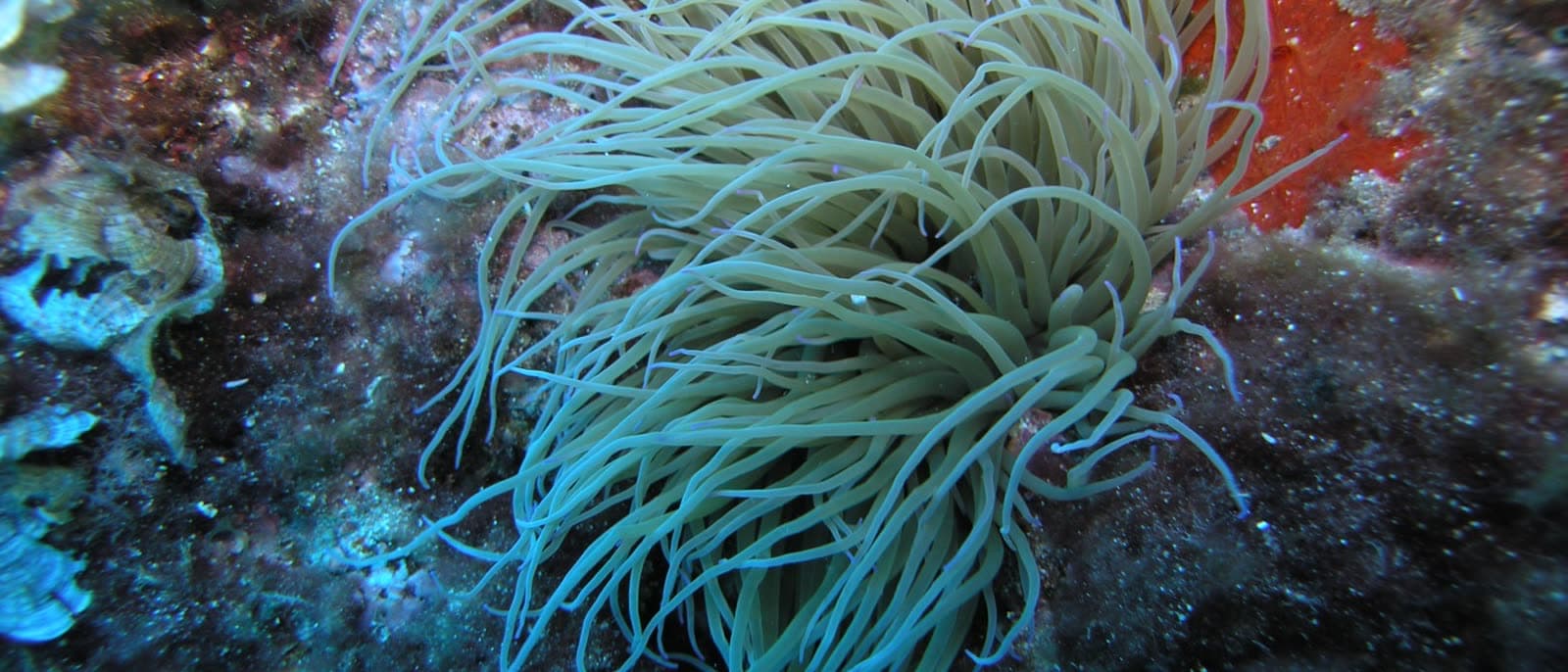
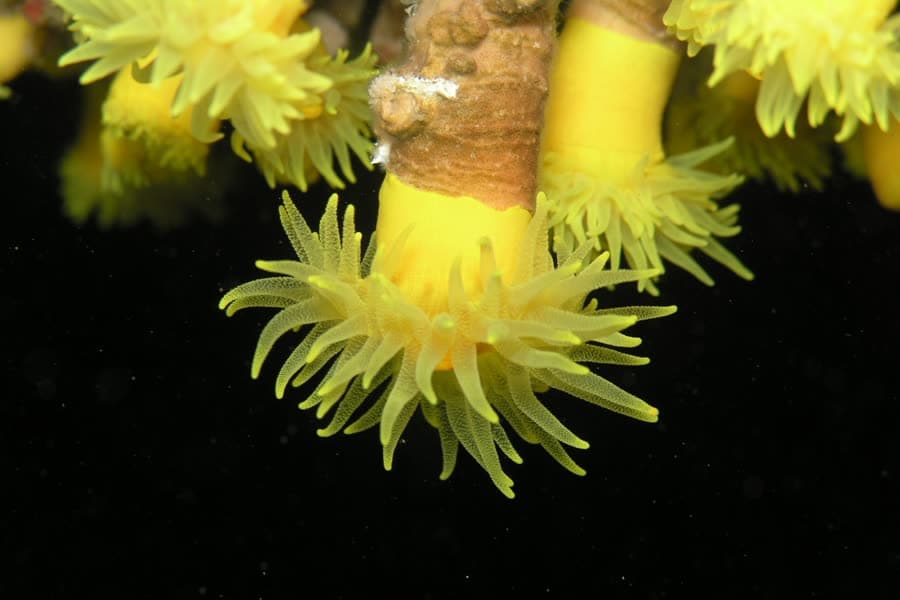
Yellow cup coral polyps growing on rock inside a sea cave beneath the cliffs of Capo Caccia, lit against the darkness.

Below the surface

Under water

Everything down here happens inside the same limestone. The cliffs of Capo Caccia carry on below the waterline as walls, arches and caves, and the protected area that covers them begins at the shore.

  • Snorkelling and seawatching

    Snorkeling

    Marine reserve

    Where
    Lazzaretto, Punta Giglio and the coves inside the reserve
    When
    June to October, when the water is warm and the maestrale is off
    What you need
    A mask and fins — or a guide, for the reserve's own routes

    The shallow edge of the reserve is the easy part of it. A mask is enough to see Posidonia meadows, the odd octopus and the rock the whole coast is built from, carrying on underwater exactly as it does above. Seawatching is one of the categories the park licenses, so a guided route is one the wardens have signed off.

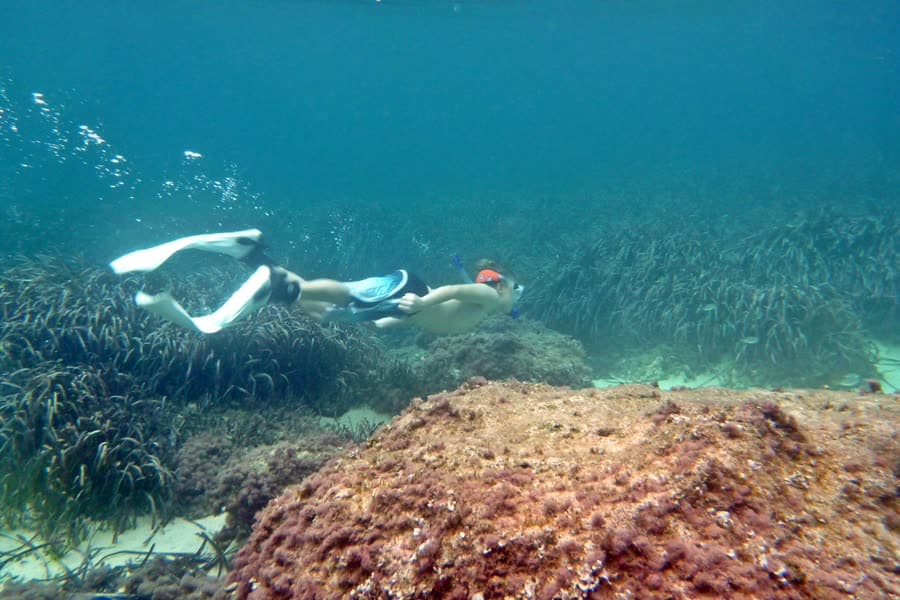
    A snorkeller swimming face down over a seagrass meadow in clear water.
  • Scuba diving

    Immersioni

    Marine reserve

    Where
    Walls, open seabed and caves between Capo Galera and Capo Caccia
    When
    All year, with the clearest water in autumn
    What you need
    A certification, and a centre the park has authorised

    Alghero dives on walls, on open seabed and inside caves, and the caves are why people come. Yellow cup coral covers the ceilings and red coral grows in the darker sections — you may look at it and nothing more. Centres working inside zones B and C have to be on the park's list, which is published and worth reading before you book.

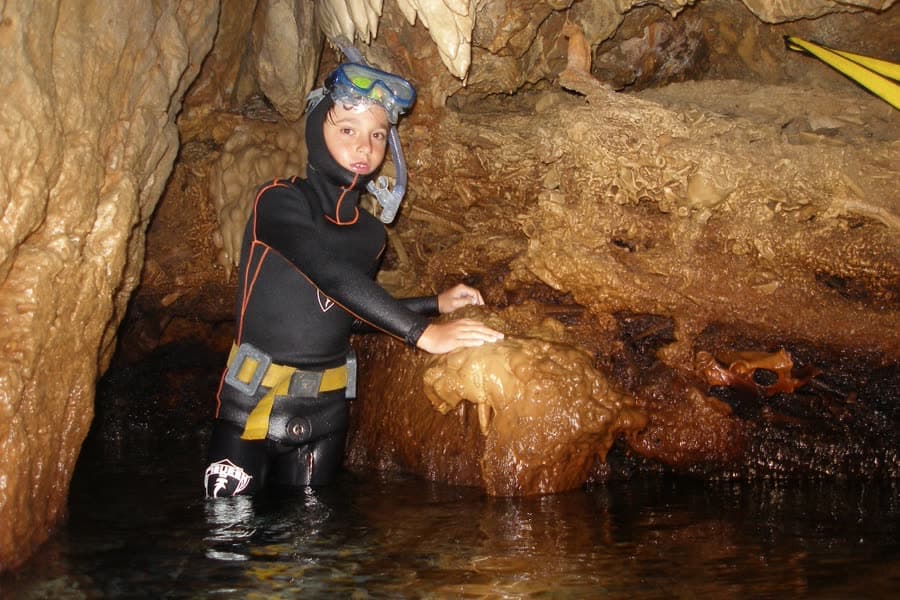
    A diver in a wetsuit beside fossil deer bones in an underwater cave at Punta Giglio.
  • Grotta di Nereo

    Marine reserve

    Where
    Under the cliffs of Capo Caccia, inside the reserve
    When
    Calm sea only; the boat cannot run in swell
    What you need
    Real experience — and a cave certificate for the deep sections

    The largest submerged sea cave in the Mediterranean is here: a main gallery of 300 m which, with its side tunnels and chambers, comes to about half a kilometre in all, between 15 and 30 m down. The regional tourist board describes the front chamber as reachable by divers who are not cave specialists. The rest is not, and cave dives inside the reserve need their own authorisation.

    Yellow cup coral polyps on the rock of a sea cave beneath the cliffs of Capo Caccia.
  • Red coral

    Corall vermell

    Where
    Below 80 m, offshore
    When
    15 May to 15 October, the licensed season
    What you need
    A professional licence — twelve exist for the whole island

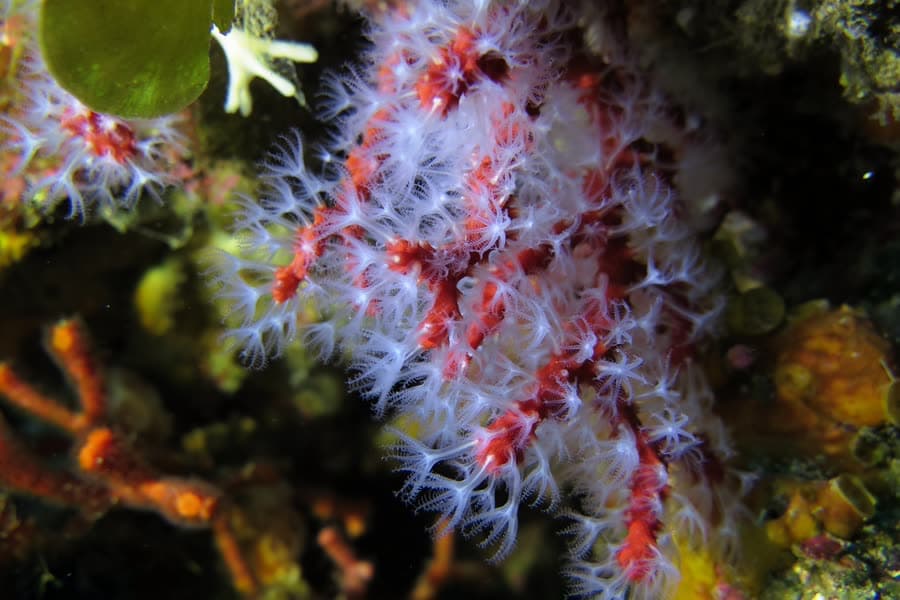
    Alghero is called the Coral Riviera and you will never watch the harvest. Sardinian rules allow coral to be taken only below 80 m, between 15 May and 15 October, by hand with a pick, under twelve authorisations island-wide; remotely operated vehicles are banned outright. Alghero is one of nine ports the licensed boats may work from, which is why the workshops in the old town are here at all.

    Red coral growing on dark rock underwater, its white polyps open.
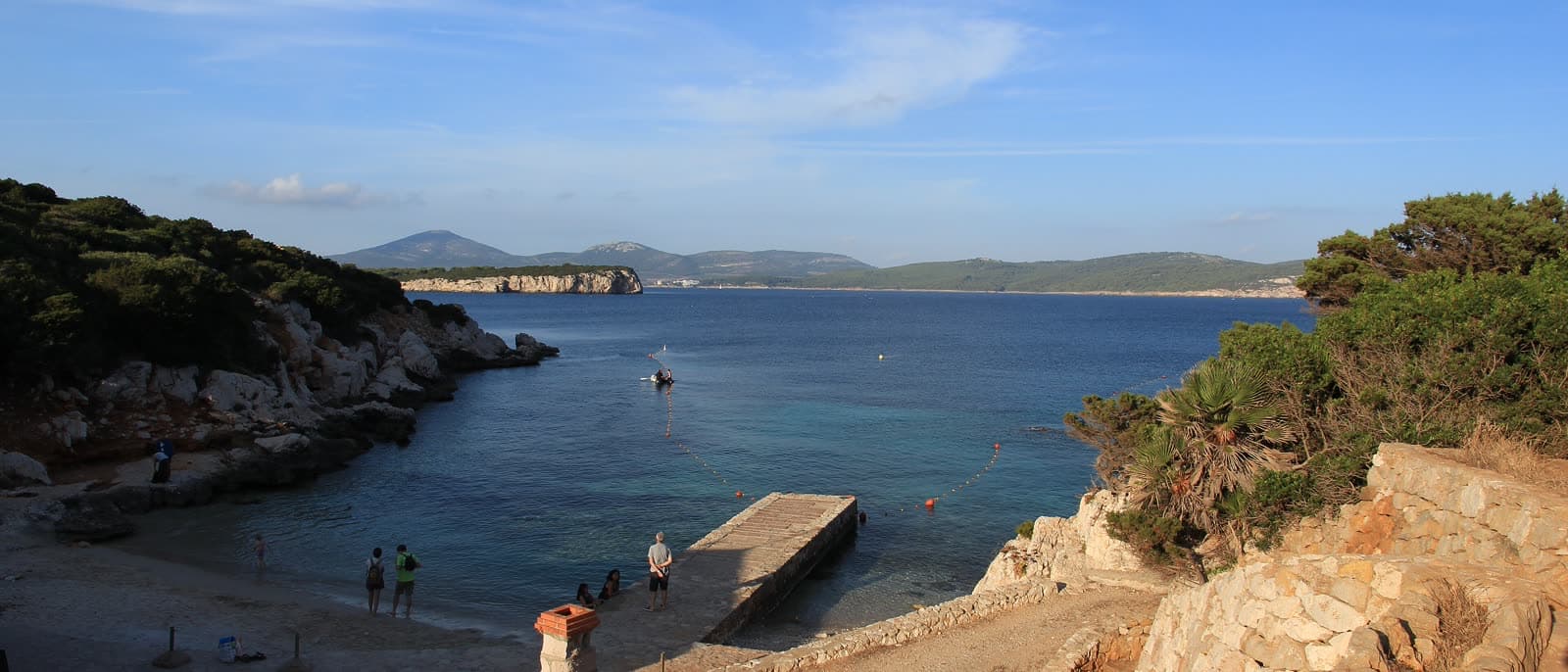
The small beach and stone jetty at Cala Dragunara, people standing at the water's edge and a sheltered bay behind.

Your own arms

Paddle and swim

Two bays do the work. Porto Conte is almost closed and usually flat; the town shore runs north from the port in one long strip of sand. Neither needs an engine.

  • Sea kayak

    Kayak da mare

    Marine reserve

    Where
    Porto Conte, Punta Giglio, Cala Dragunara
    When
    April to October, mornings for the flattest water
    What you need
    A rental or a guided trip

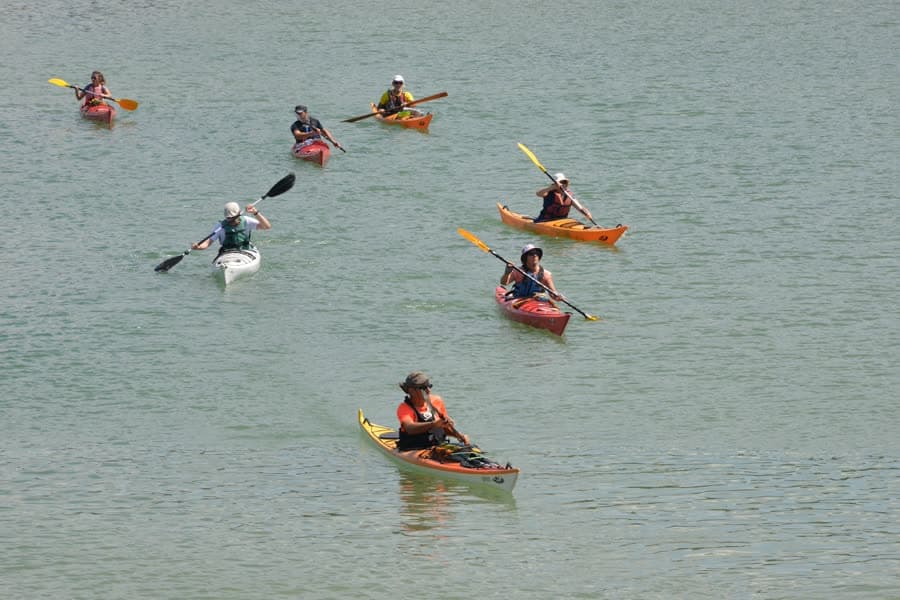
    Porto Conte is a bay with a narrow mouth, so it stays flat when the coast outside does not. From the water you reach the foot of Punta Giglio and the small landings under the cliffs, which no road goes near. Rowing and sailing are allowed in zones B and C of the reserve and motorboats are speed-limited there, so a paddle is the quiet way through it.

    A group of sea kayaks paddling in formation across calm water.
  • Stand-up paddle

    SUP

    Marine reserve

    Where
    Mugoni and the sheltered end of Porto Conte
    When
    Mornings, before the thermal wind fills in
    What you need
    A board, and nothing else

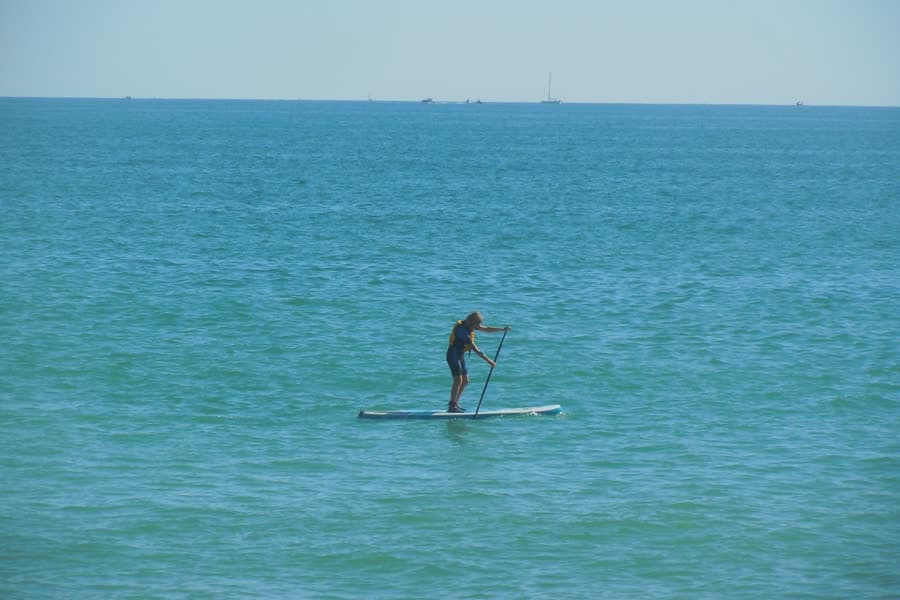
    The same bay works for a board, with one condition: go early. The north-westerly here is thermal in summer, so mornings are glassy and afternoons are not. The wind that makes Mugoni a windsurfing beach after lunch makes it a poor paddling one.

    A person standing on a paddleboard on flat open water.
  • Swimming

    Bagno

    Where
    The town beaches and the coves north of the port
    When
    Warmest from August to October
    What you need
    Nothing

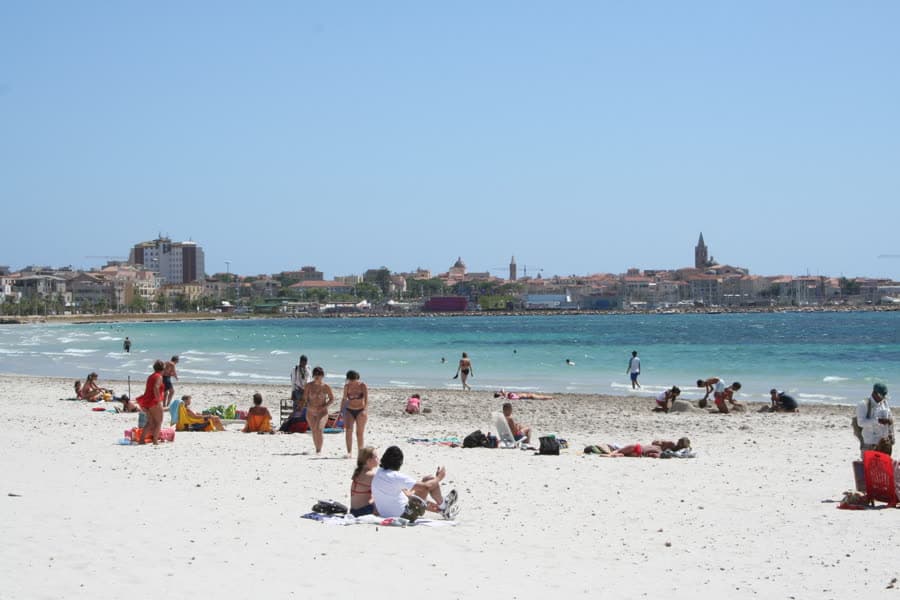
    The sea passes 20 °C in June and holds above it to the end of October, peaking near 25 °C in August. September is the part most calendars get wrong: the water is barely below its August figure while the air has already dropped a few degrees. Nine beaches, from the town sand to La Pelosa, have their own page.

    The town beach at Alghero, bathers on the sand and the old town skyline behind.
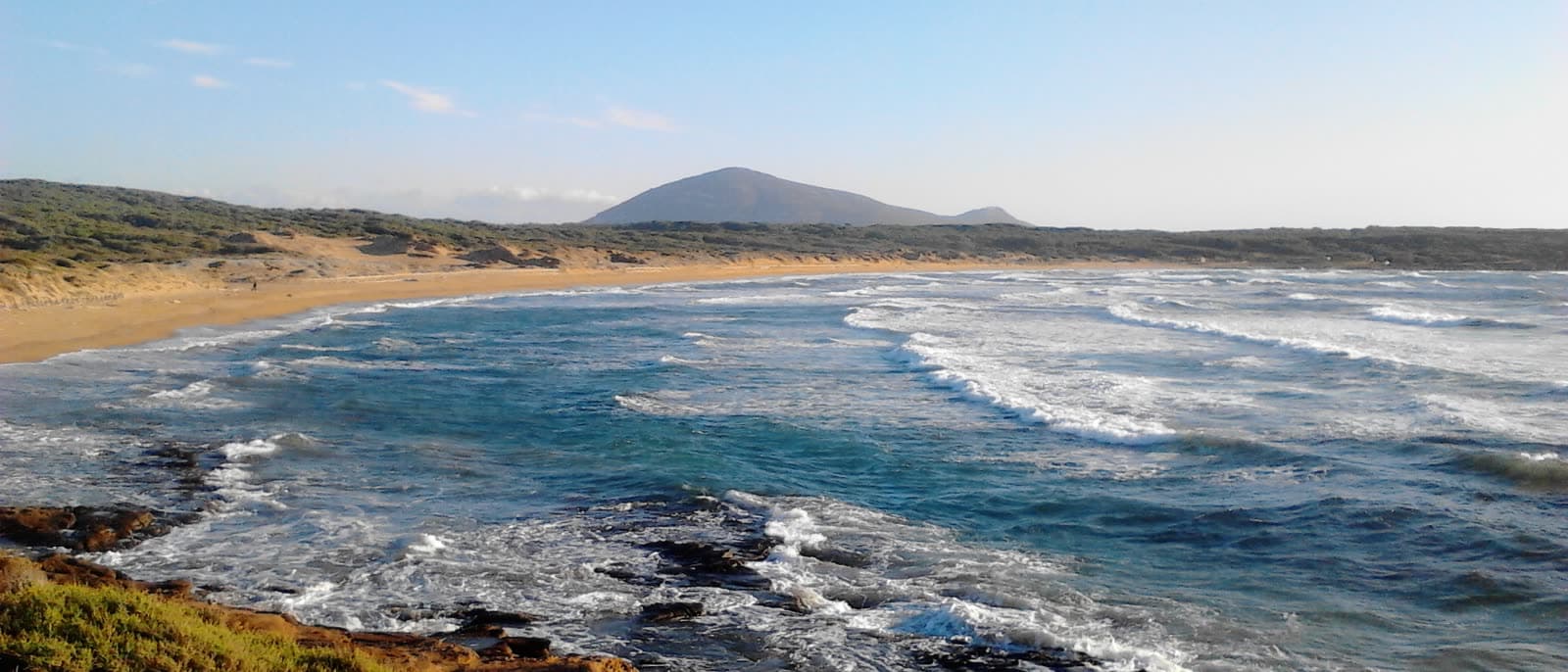
Waves rolling into the bay at Porto Ferro under a winter sky, with a low headland closing the far side.

Wind and swell

Sail, board and wave

The wind here has a name and a timetable. The maestrale builds through summer afternoons and the western shore takes the swell, which splits this coast neatly: flat water inside the bay, waves outside it.

Wind and waves, month by month

  • Sailing

    Vela

    Where
    The marina below the walls, in the middle of town
    When
    All year; courses run in season
    What you need
    A club, a charter, or a licence above 40.8 hp

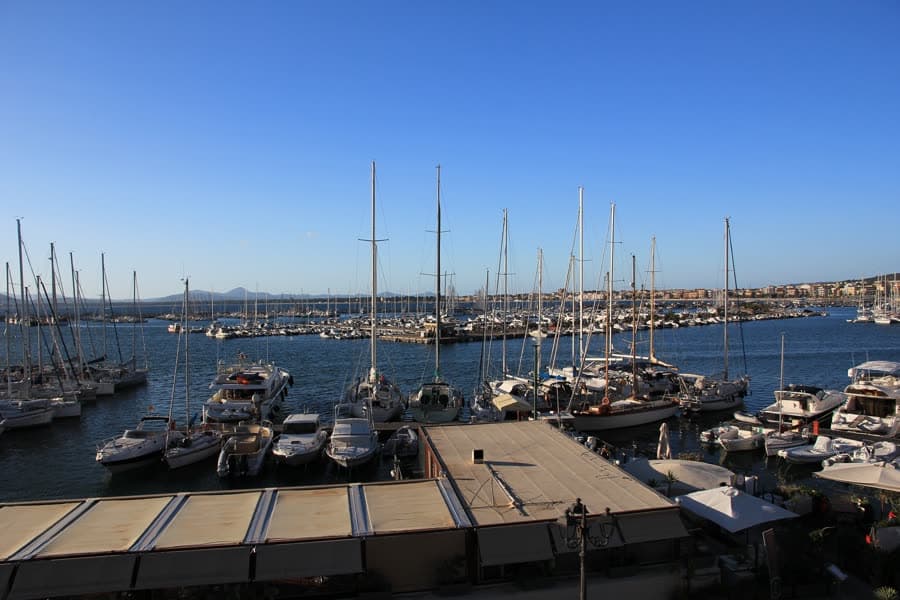
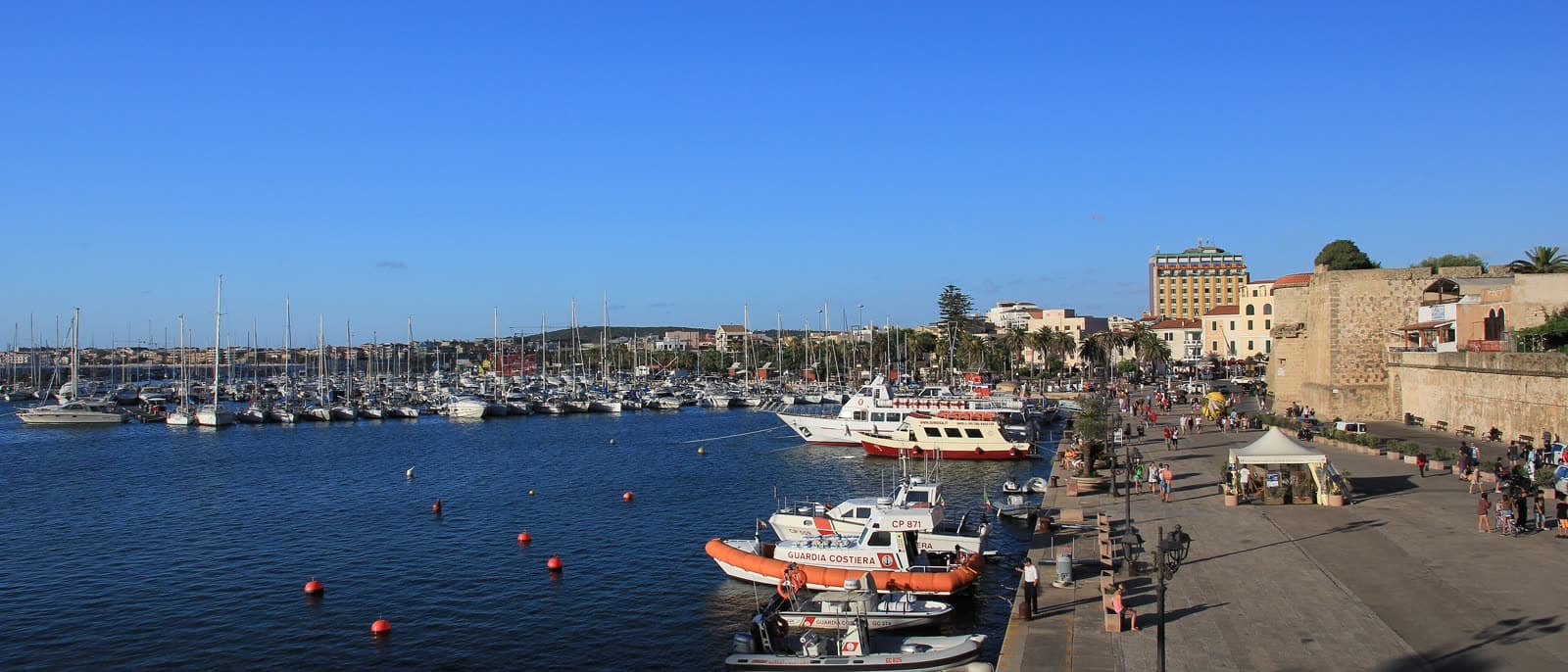
    The marina sits under the sea walls, which puts the start of a day's sailing in the middle of the old town. Two clubs teach here: Yacht Club Alghero and the Alghero section of the Lega Navale. If you would rather take a boat out yourself, Italian rules let you do it without a licence up to 40.8 hp and within six nautical miles of the coast.

    Yachts moored along the pontoons of Alghero's marina.
  • Lateen sail

    Vela latina

    Where
    Alghero, and Stintino for the regatta
    When
    Courses in season; the Stintino regatta in late August
    What you need
    A beginners' course — no experience for the first level

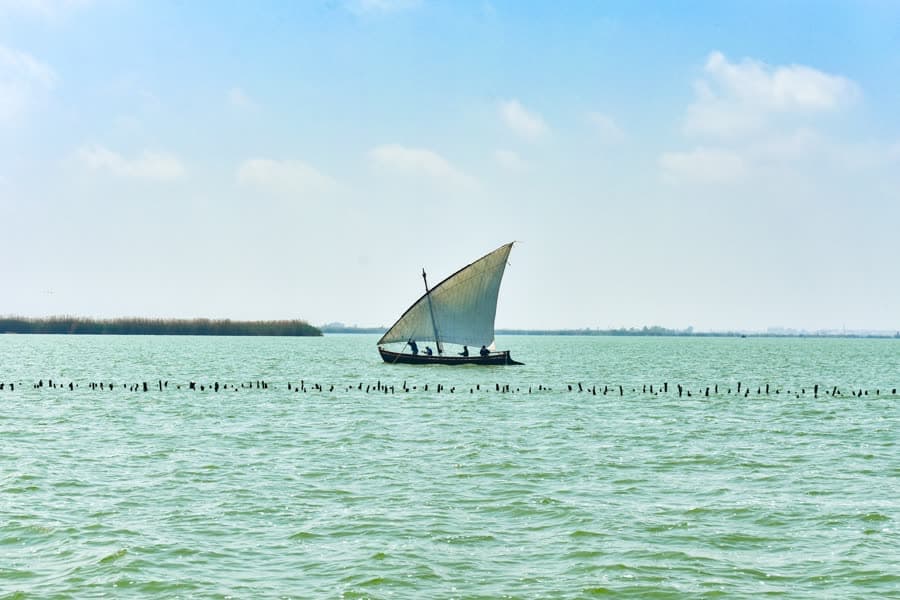
    The lateen is the rig this coast worked under before engines: one spar, one triangular sail, and boats built locally to carry it. The Lega Navale runs courses on it, beginners included, using Annina — a boat from 1920 kept for exactly that. The big gathering is not here but at Stintino, where the lateen regatta has run since 1983.

    A boat under a single triangular lateen sail on a shallow lagoon.
  • Windsurf, wing and kite

    Marine reserve

    Where
    Mugoni and La Stalla; the kite zone by the town beach
    When
    Summer afternoons, once the thermal north-westerly builds
    What you need
    A school, or your own kit and the sense to read the bay

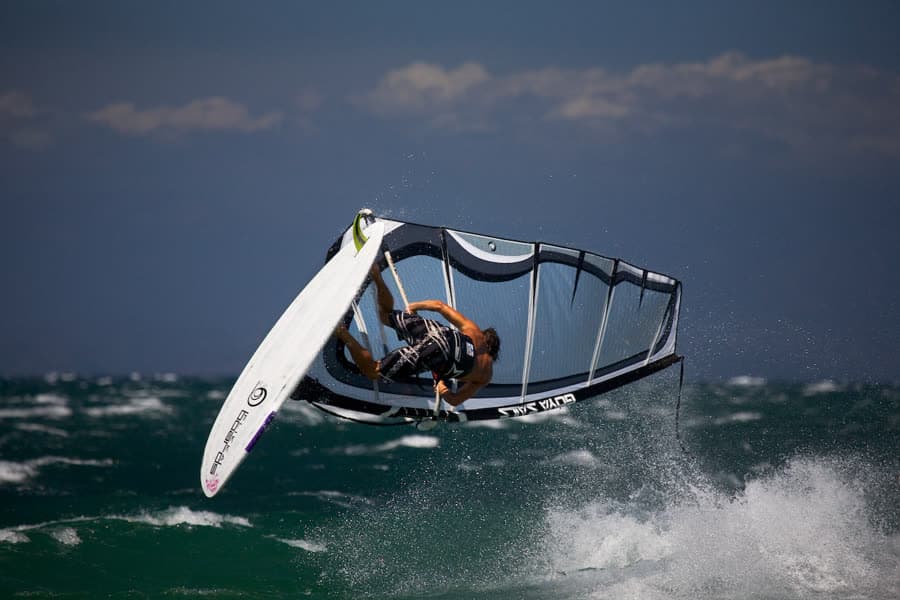
    Boards go to Mugoni and neighbouring La Stalla because the summer north-westerly arrives as a thermal and strengthens through the afternoon. Our own thirty-year series puts the maestrale on top on 28% of days from June to August, ahead of the tramontana and the ponente. Wind-driven boards use the bay; powered watercraft do not, because jet skis are banned across the whole reserve.

    A windsurfer lifting clear of the water in a strong breeze off Sardinia.
  • Surfing

    Surf

    Where
    Porto Ferro, and Poglina — La Speranza — to the south
    When
    Autumn and winter, on a westerly swell
    What you need
    Your own board, and respect for the rip

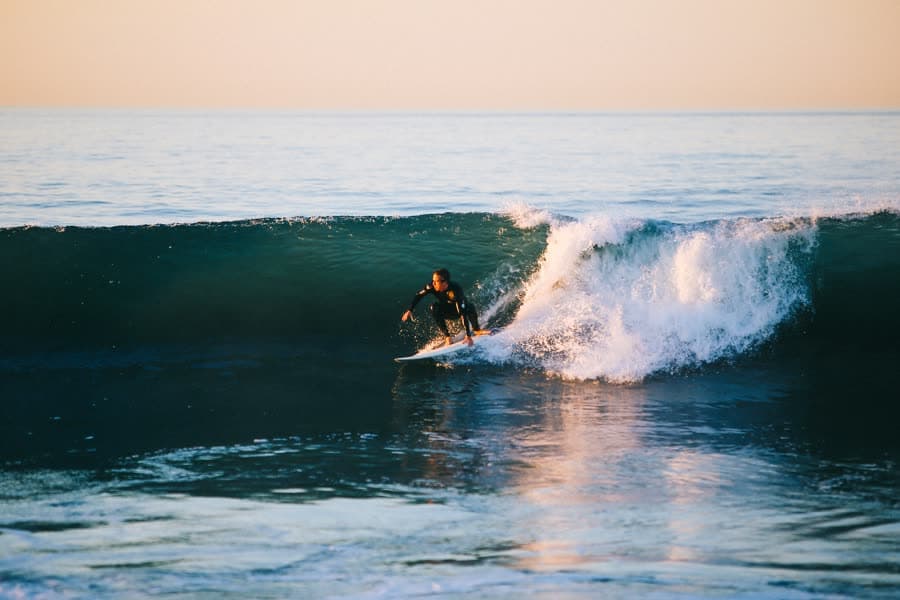
    Porto Ferro faces west into open sea and takes swell from the south-west round to the north, which is why it has a surfing reputation and the sheltered beaches do not. The season is the opposite of the tourist one: from November to March the daily maximum wave height along this coast roughly doubles against summer. The exposure that builds the wave builds the current with it.

    A surfer riding along the face of a breaking wave.
Excursion boats moored along the quay in Alghero's port, with the old town and its sea walls behind them.

Someone else at the helm

Boats with a crew

Parts of this coast have no road. The cliffs between Capo Galera and Capo Caccia, and the cave at the foot of them, are reached from the water or not at all.

  • Boat to Neptune's Grotto

    Linea Grotte

    Marine reserve

    Where
    Alghero's tourist port, or the jetty at Cala Dragunara
    When
    April to September, sea permitting
    What you need
    Two tickets: one for the boat, one for the cave

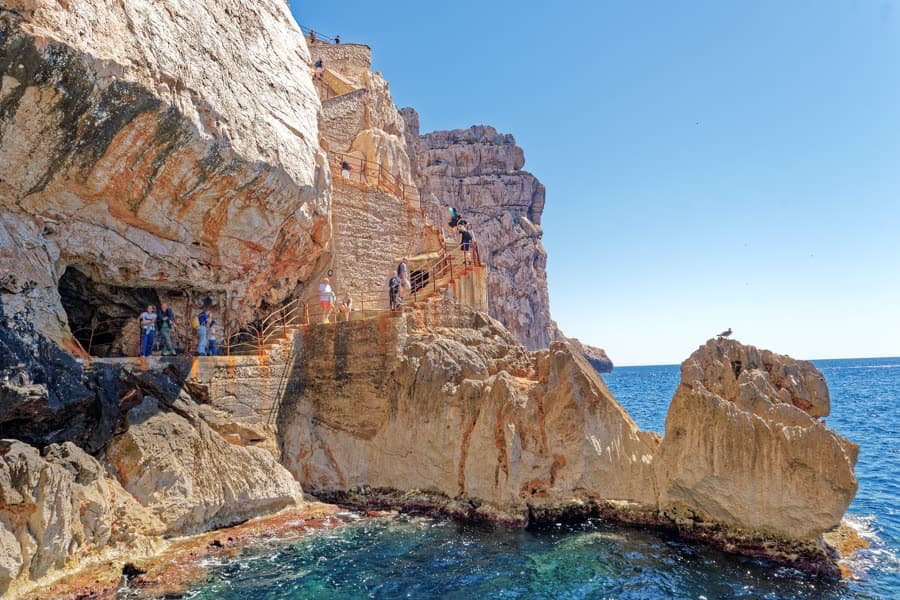
    From April to September boats run to the Grotte di Nettuno from Alghero's tourist port and from the jetty at Cala Dragunara, and the crossing along the cliffs takes about forty minutes. It sails only when the sea allows and the cave itself closes in heavy swell, so check before you set out. The alternative from land is the Escala del Cabirol and its 654 steps.

    The cliff at Capo Caccia seen from the water, the Escala del Cabirol staircase cut into the rock above the cave mouth.
  • A day along the Coral Riviera

    Marine reserve

    Where
    West out of the port, along the cliffs
    When
    Summer
    What you need
    Nothing; the boat does the work

    The other use of the same boats is a whole day: west out of the port, along the cliffs of the Coral Riviera, with swimming stops and a call at Cala Dragunara. For most people it is the only way to see the coastline between Capo Galera and Capo Caccia, because no road runs along it.

    The headland of Capo Caccia rising from deep blue sea, the lighthouse on top.
  • Out with the fishermen

    Pescaturismo

    Marine reserve

    Where
    From the port, into the gulf
    When
    Depends on the boat and the season
    What you need
    A place on a licensed boat

    Pescaturismo is a licensed activity, not a figure of speech: you go out on a working fishing boat, watch the gear come up and eat what it brings. Two operators hold the authorisation for it inside the marine reserve, and the park publishes the list alongside the rest.

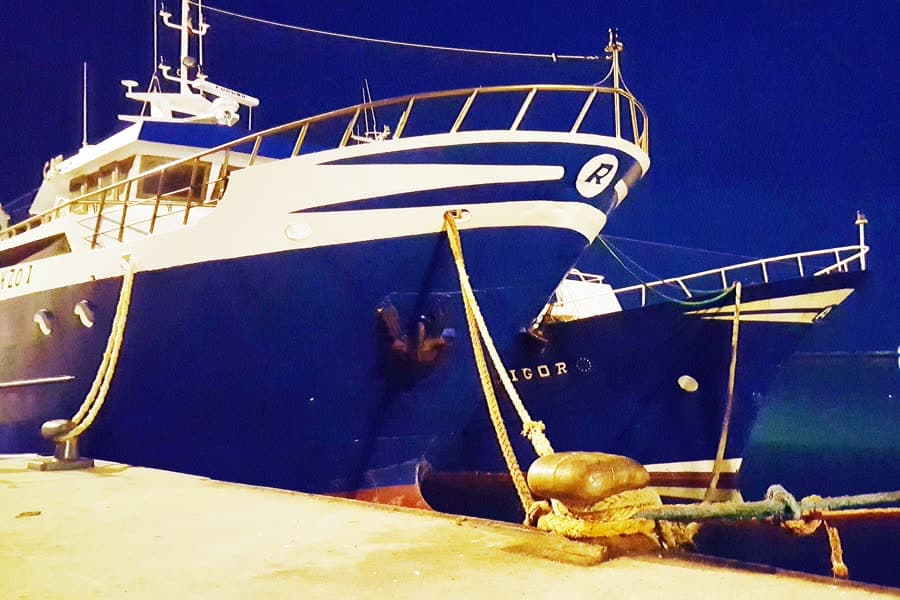
    The bow of a working fishing boat moored at a quay.

The rules

What the marine reserve allows

Most of the coast west of Alghero sits inside the Capo Caccia – Isola Piana marine protected area, managed by the Parco di Porto Conte. It is not a formality: it decides where you may anchor, who may take you diving, and what you may bring back.

Protected sea
2,631 ha
Coastline
36 km
Zones
A, B and C
Established
2002
  • Not allowed

    Zone A is closed

    Two small stretches are integral reserve: the water off the west side of Isola Piana, and the area by Punta Sant'Antonio at Porto Agra. No swimming, no diving, no boats — research and surveillance only.

  • Not allowed

    No spearfishing

    Banned across the whole reserve, in every zone, all year. This is the rule visitors get wrong most often, because a few hundred metres outside the boundary the same activity is legal with a licence.

  • Not allowed

    No jet skis

    Personal watercraft are banned throughout, along with discharging waste and sounding horns for no reason. Boards driven by wind or by waves are a different matter.

  • With permission

    Anchor off the meadows

    Posidonia is a priority habitat under the EU Habitats Directive and its meadows here run from the shallows down to about 45 m. Anchoring on them is prohibited. The park keeps mooring buoys in Porto Conte bay and off the south side of Punta del Dentul, and you book a place before you arrive.

  • With permission

    Organised trips go through licensed operators

    Diving, guided visits, seawatching, boat hire and pescaturismo inside zones B and C are run by operators the park authorises each year, and the current list is published. Cave dives need a separate authorisation, and some caves a cave-diver certificate on top of it.

  • Not allowed

    Coral stays where it is

    Red coral may only be taken by licensed professionals, below 80 m, between 15 May and 15 October, by hand. Picking up a souvenir is not a small offence here — preventing it is the reason the whole permit system exists.

SourcesAlghero ParksElenco operatori autorizzati

Checked with the managing body on 2 September 2026. Zones, authorisations and the operator list are re-issued every year, so the park's own site is the version that counts.

Questions

The short answers

When is the water warm enough to swim?

It passes 20 °C in June and stays above it until the end of October, peaking near 25 °C in August. September is the quiet answer: the water is barely below its August figure while the air has already dropped a few degrees.

Do I need a licence to take a boat out?

Not under Italian rules if the engine is 40.8 hp or less and you stay within six nautical miles of the coast. Above either limit you need a patente nautica. Inside the marine reserve there are further conditions on where you may go and where you may moor.

Can I dive if I have never dived before?

Yes, through a centre — introductory dives are shallow and supervised. What you cannot do without qualifications is the caves: those need real experience, an authorisation from the park, and for some of them a cave-diver certificate.

Is the boat to Neptune's Grotto ever cancelled?

Often enough to plan around. It runs from April to September and only when the sea allows, and the cave closes in heavy swell as well. From November to March the daily maximum wave height along this coast roughly doubles against summer.

Can I take home a piece of red coral?

Not out of the water. Harvesting in Sardinian waters is a licensed profession with twelve authorisations for the whole island, a fixed season and a minimum depth of 80 m. Buy it from a workshop in the old town instead — that is where the licensed catch ends up.

Which way does the wind blow here?

From the north-west, for most of the summer. Our thirty-year series puts the maestrale on top on 28% of days from June to August, with the ponente and the tramontana close behind. It is why the exposed western beaches get the waves while Porto Conte stays flat.