AlgheroHistory · Història
History of Alghero
L'Alguer · Catalan since 1354
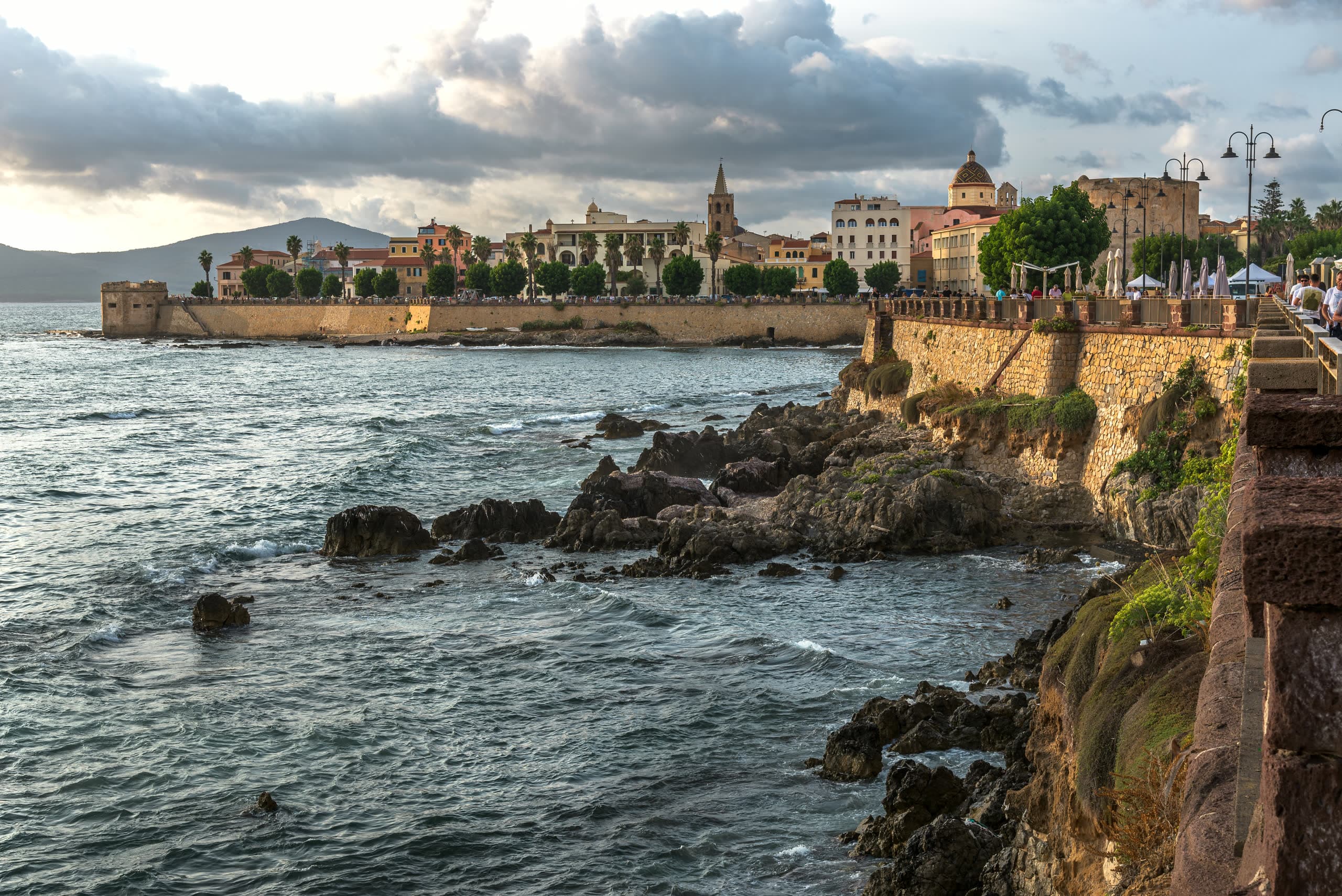
A Genoese trading post on a coast that had been lived on for millennia. In 1354 the Crown of Aragon took Alghero and resettled it from Catalonia and Majorca — the sea walls, the street names and the language still carry that turn.
Photo Mauriz-79 / Wikimedia Commons, CC BY-SA 4.0
- 15th c. BCNuraghe Palmavera
- 9th c. BCPhoenician trade
- 1st c. ADRoman villa
- 12th c.Doria of Genoa
- Crown of Aragon
- Charles V in town
- House of Savoy
- Kingdom of Italy
- Catalan recognised
Curiosity · Curiositat
7–8 October 1541
The emperor at the window
Todos caballeros.“You are all knights.”
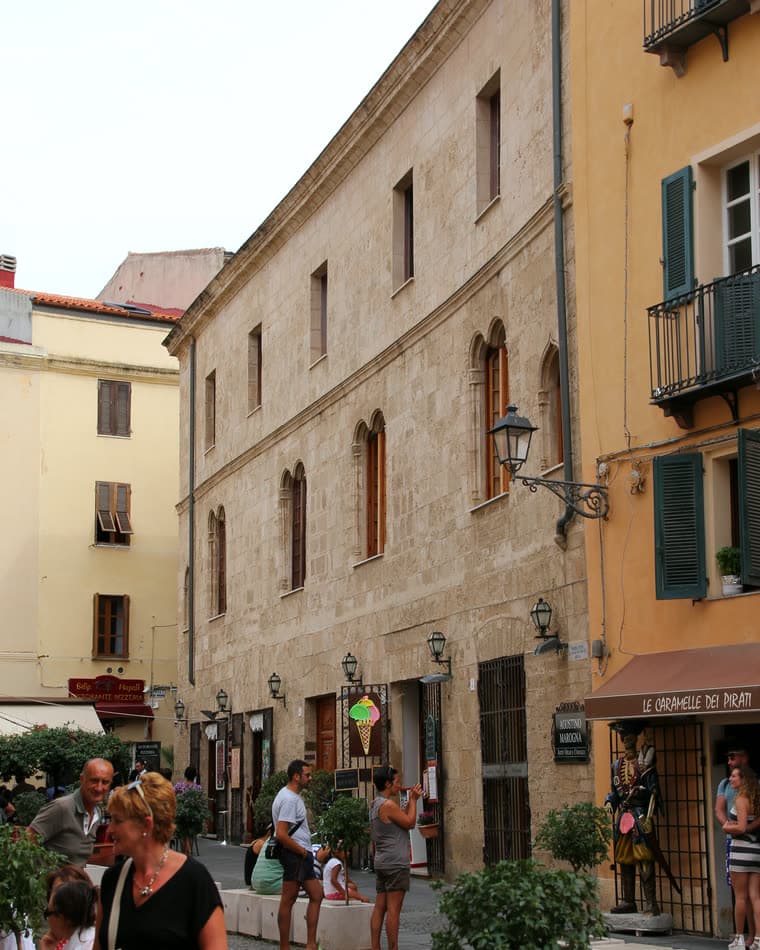
Charles V broke his voyage to Algiers at Alghero for two days and, tradition has it, leaned from a window of Palazzo d'Albis on Piazza Civica to make the whole town noble in one sentence. The window was later walled up out of reverence for the emperor. One catch: Giuseppe Manno, a historian born in Alghero, described those two days over four pages and never mentioned it.
SourcesTodos caballeros — Wikipedia (it)Alghero — Wikipedia (en)
Chronicle · Crònica
Six thousand years on one bay
Eighteen moments that made Alghero what it is: tombs cut into rock before there was a town, a conquest that replaced its population, the coral that paid for it, the walls that came down, and the language that refused to.
- 01
c. 4000–1800 BC
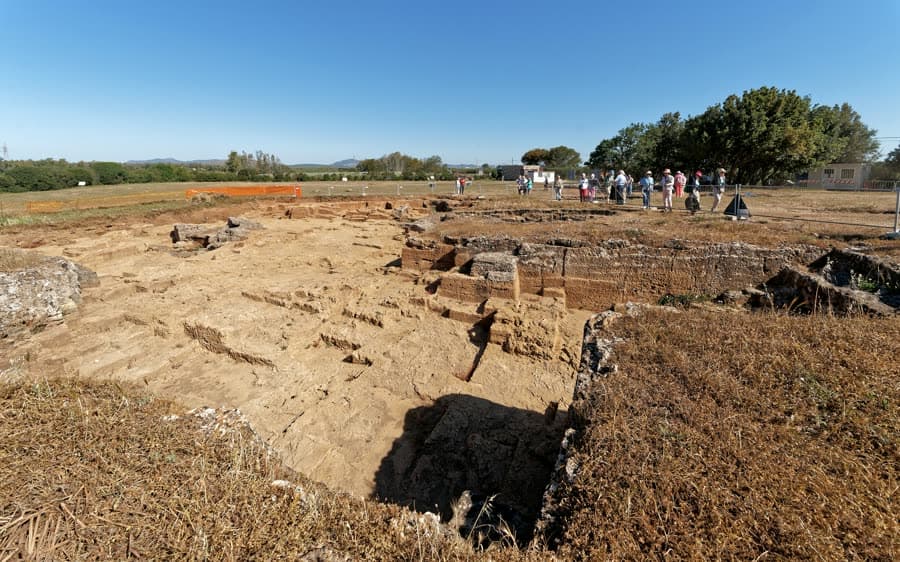
Chambers of the Anghelu Ruju necropolis, cut into the sandstone.Holger Uwe Schmitt / Wikimedia Commons, CC BY-SA 4.0 The rock-cut tombs of Anghelu Ruju
Long before there was a town, people here were burying their dead in chambers cut into the sandstone north of today's Alghero.
Full story
Anghelu Ruju is the largest pre-nuragic necropolis in Sardinia: 38 domus de janas — “fairy houses” — carved underground, some with as many as eleven chambers, in use for well over a thousand years. It was found by accident in 1903 during building work on the Sella & Mosca estate and takes its name from the landowner, Angelo Ruju. The winery handed the site over to the state in 1977.
SourcesNecropoli di Anghelu Ruju — Wikipedia (it)Domus de Janas — UNESCO
- 02
15th–8th c. BC
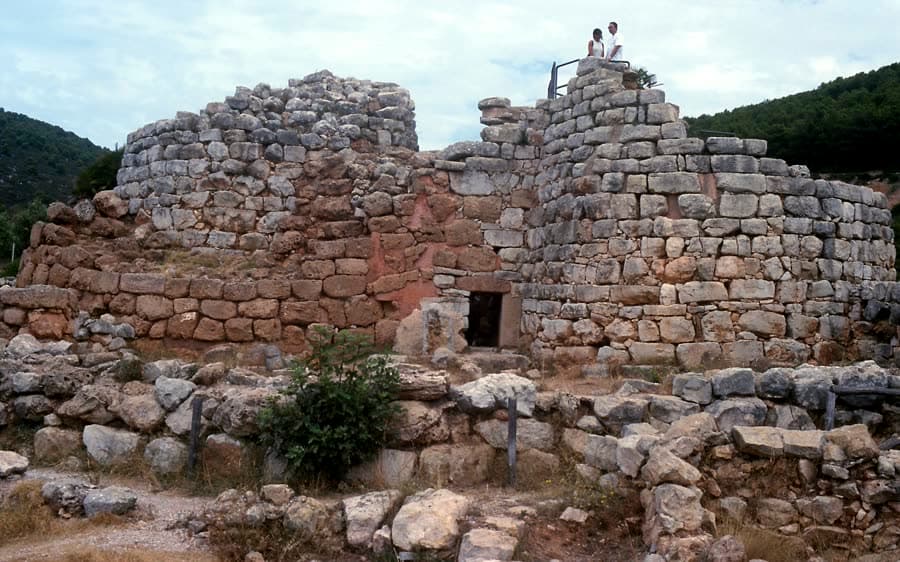
The central towers of the Palmavera nuragic complex.Falk2 / Wikimedia Commons, CC BY-SA 4.0 Nuragic Palmavera
A stone tower and a village of huts stood a few kilometres from today's old town for some seven centuries.
Full story
The main tower went up in the 15th–14th century BC; a second tower and a village followed. Fewer than fifty huts survive, though archaeologists reckon on 150 to 200 when the place was alive. Its meeting hut still has the stone bench running round the wall and, at the centre, a sandstone model of a nuraghe. The village burned and was abandoned around the 8th century BC.
SourcesComplesso nuragico di Palmavera — SardegnaCulturaNuraghe Palmavera — SardegnaTurismo
- 03
9th–7th c. BC
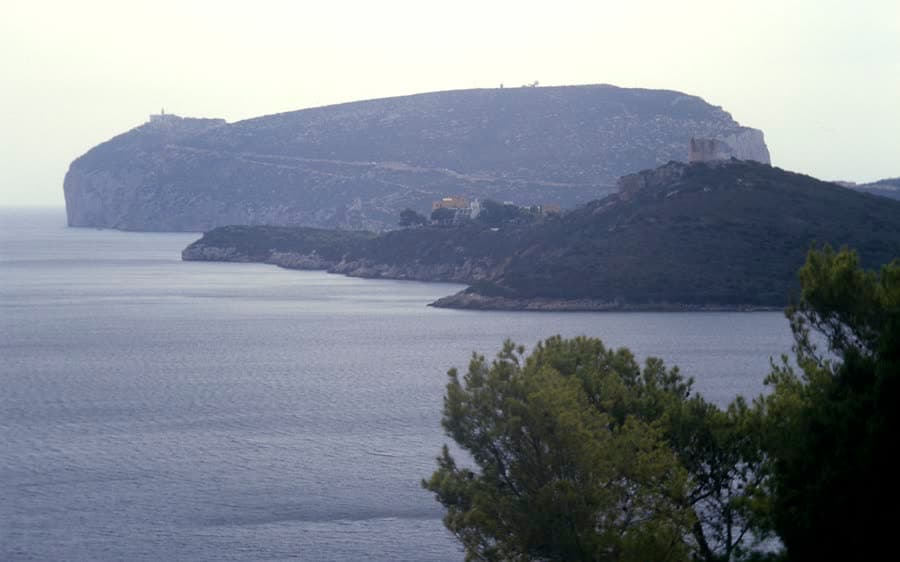
The bay of Porto Conte, the natural harbour beside Sant'Imbenia.Falk2 / Wikimedia Commons, CC BY-SA 4.0 Phoenician ships in Porto Conte
At Sant'Imbenia, on the bay of Porto Conte, a nuragic village turned into one of the earliest meeting points between Sardinians and Phoenicians.
Full story
The excavations there produced some of the oldest Phoenician and Greek pottery in the western Mediterranean, and a local hybrid: the “Sant'Imbenia amphora”, made on the spot between the 9th and 7th century BC and shipped as far as the Iberian peninsula. The bay was a natural harbour on the metal routes — silver, lead, copper, iron — which is why foreign traders settled in among the huts.
SourcesComplesso di Sant'Imbenia — SardegnaCulturaPhoenician and Punic Sardinia — Wikipedia (en)
- 04
1st c. BC – 1st c. AD
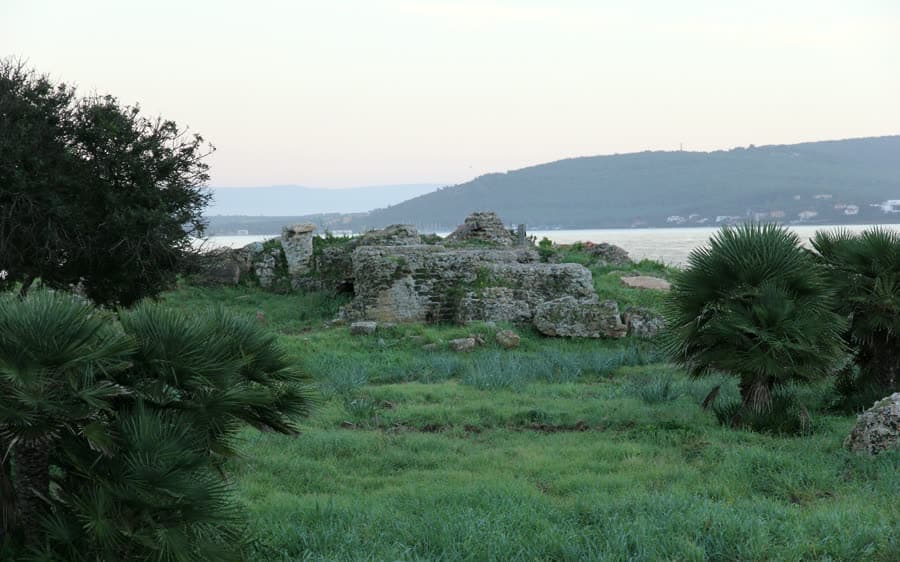
Remains of the Roman villa at Sant'Imbenia, Porto Conte.Gianni Careddu / Wikimedia Commons, CC BY-SA 3.0 A Roman villa on the Bay of Nymphs
Rome called Porto Conte “Portus Nympharum”. On its western shore a seaside villa with baths was built at Sant'Imbenia.
Full story
The villa had some 49 rooms spread over roughly 140 metres: decorated halls, service quarters and a bath suite, put up between the end of the 1st century BC and the start of the 1st century AD. It was a place to rest rather than a working farm. Excavations between 1994 and 2005 recovered the wall and floor decoration of two of its rooms.
SourcesVilla romana di Sant'Imbenia — Alghero TurismoPorto Conte — Wikipedia (en)
- 05
12th century
The Doria build a town
A Genoese noble family founded the settlement that would become Alghero, on a stretch of coast with nothing on it.
Full story
The foundation is usually dated between 1102 and 1112. The Doria held lands across northern Sardinia, and a walled town with a harbour served both their trade and their long quarrel with Genoa, Pisa and the Sardinian giudicati. For two centuries Alghero was a Doria town — the Catalan chapter had not started.
SourcesAlghero — Wikipedia (en)La storia di Alghero nel Medioevo — algheroweb.net
- 06
1353–1354
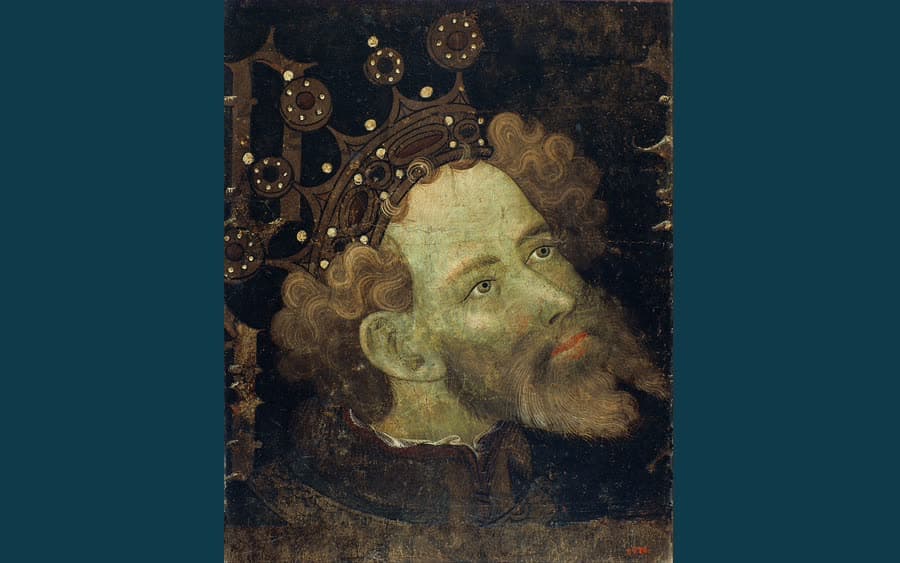
Peter IV of Aragon, painted by Jaume Mateu.Jaume Mateu / Museu Nacional d'Art de Catalunya / Wikimedia Commons, public domain The fleets and the siege
Genoa took the town by agreement, Aragon took it by force: a sea battle in Porto Conte, a revolt, then a royal siege.
Full story
In February 1353 the Sardinian branch of the Doria ceded Alghero to Genoa. On 27 August an Aragonese-Venetian fleet beat the Genoese in the bay of Porto Conte and the town opened its gates — but the garrison left behind was small, and the inhabitants took the place back. Peter IV of Aragon came in person the next summer; after a long siege Alghero surrendered on 9 November 1354.
SourcesBattaglia navale di Porto Conte — Wikipedia (it)1353, la battaglia navale di Porto Conte — Storie di Alghero
- 07
1354–1372
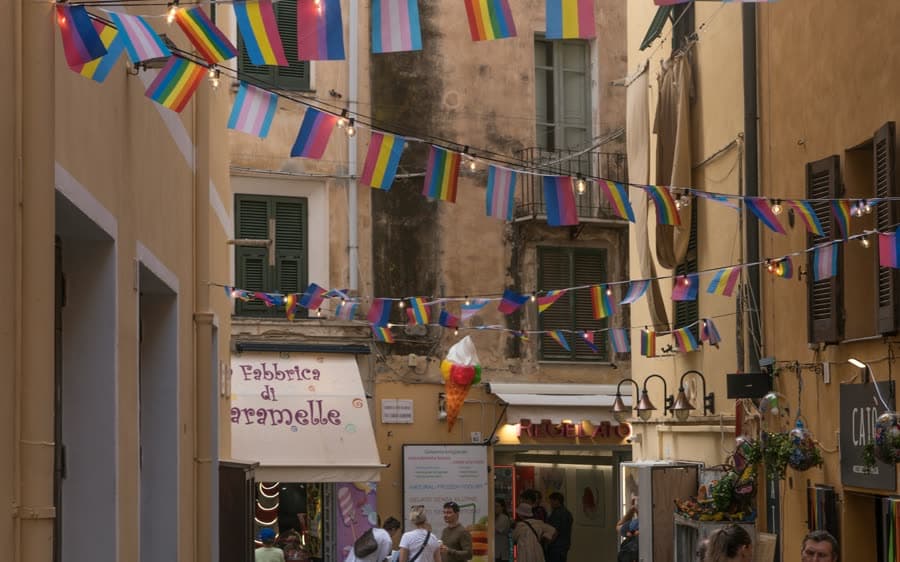
A lane in the old town, on the street grid the settlers inherited.Alexkom000 / Wikimedia Commons, CC BY 4.0 A city repopulated
The rebels were expelled and settlers brought in from Catalonia and Majorca. This is where algherese comes from.
Full story
The crown advertised the move: money, amnesties for lesser crimes, exemption from customs duties, the right to sell up after five years. Resettlement ran until about 1372. It had a hard edge — Sardinians and Genoese could not own property inside the walls or trade there, and a privilege of 10 July 1478 barred Sardinians and Corsicans from living in the town at all. The language still spoken in these lanes is the result of that policy.
SourcesIl ripopolamento catalano di Alghero — Storie di AlgheroA. Mattone, Privilegi e istituzioni (PDF) — Università di Sassari
- 08
14th–18th century
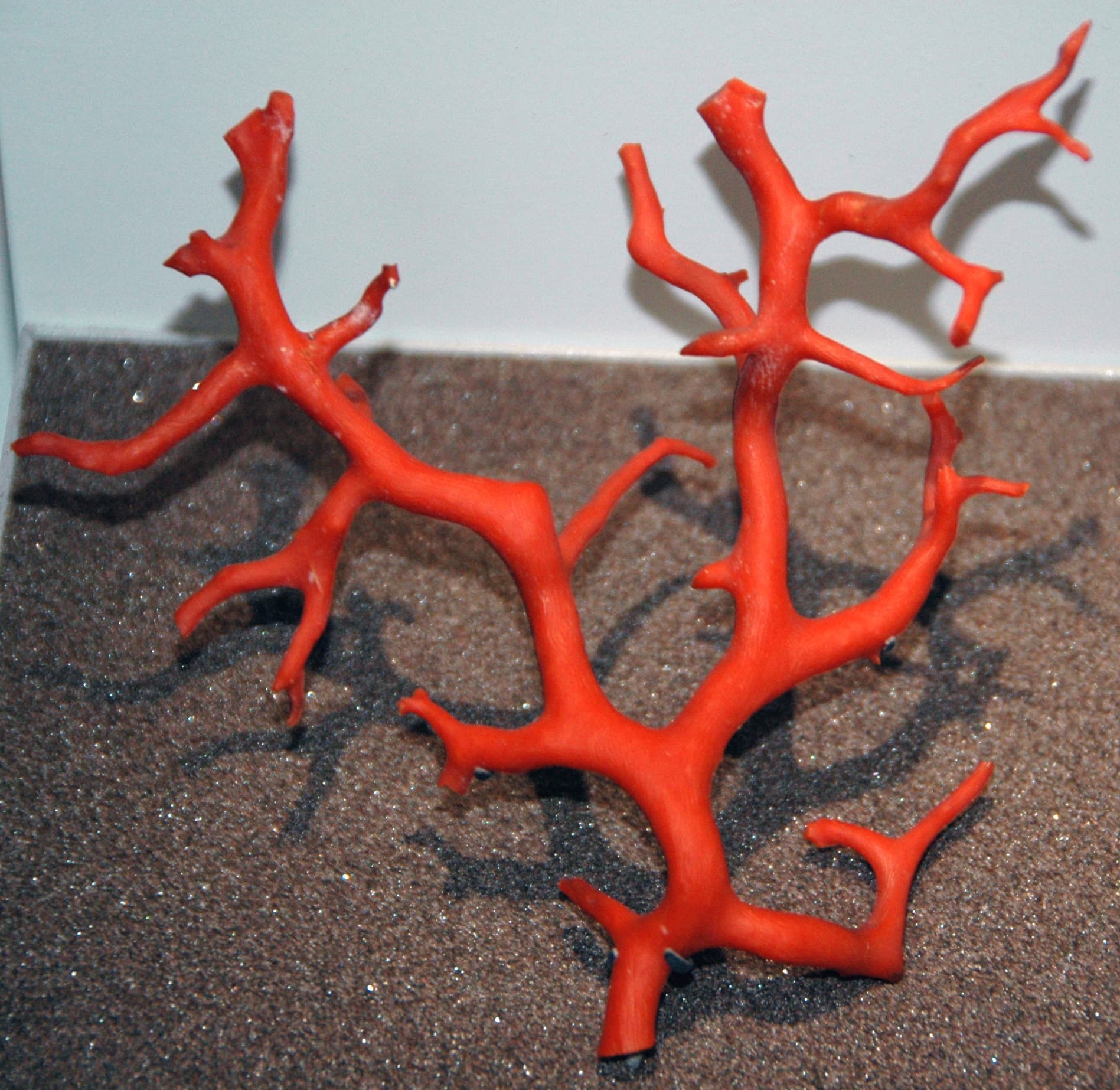
Corallium rubrum, the red coral of the riviera.James St. John / Wikimedia Commons, CC BY 2.0 Red gold
Coral fished off these cliffs paid for the city for centuries and gave the coast the name it still carries.
Full story
Corallium rubrum grows between 30 and 200 metres down, and Alghero sits above some of the richest beds in the Mediterranean. Fishing it probably goes back to antiquity, but under the Catalans it became the town's business, and the boom of the 1700s made the port a Mediterranean centre for the trade. A branch of coral went onto the town's arms; workshops in the old town still cut it by hand.
SourcesMuseo del Corallo — Musei di AlgheroRiviera del Corallo — Wikipedia (en)
- 09
16th century
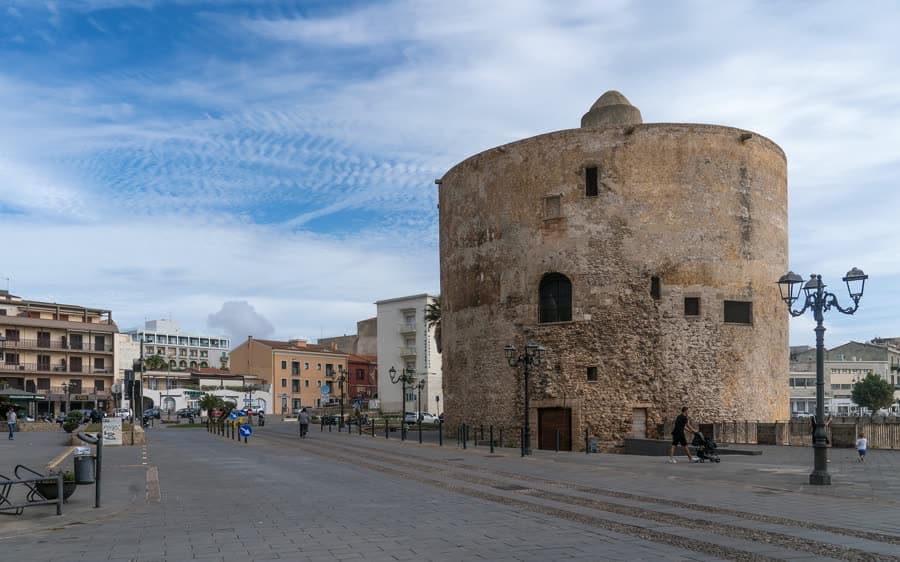
Torre di Sulis, one of the towers of the 16th-century circuit.Alexkom000 / Wikimedia Commons, CC BY 4.0 The fortress city
Ferdinand the Catholic turned Alghero into the second stronghold of Sardinia: a full circuit of walls, towers at the corners, bastions to the sea.
Full story
Most of what stands today was built in the 16th century, when the danger came from Barbary raiders and rival fleets. The circuit ran right round the town, with towers at its angles — Sulis, Sant Jaume, Esperó Reial, Porta a Terra — and a landward gate shut at night. Alghero was a garrison as much as a port, and stayed one for three hundred years.
SourcesMura e bastioni di Alghero — SardegnaTurismoLe fortificazioni — Musei di Alghero
- 10
1720
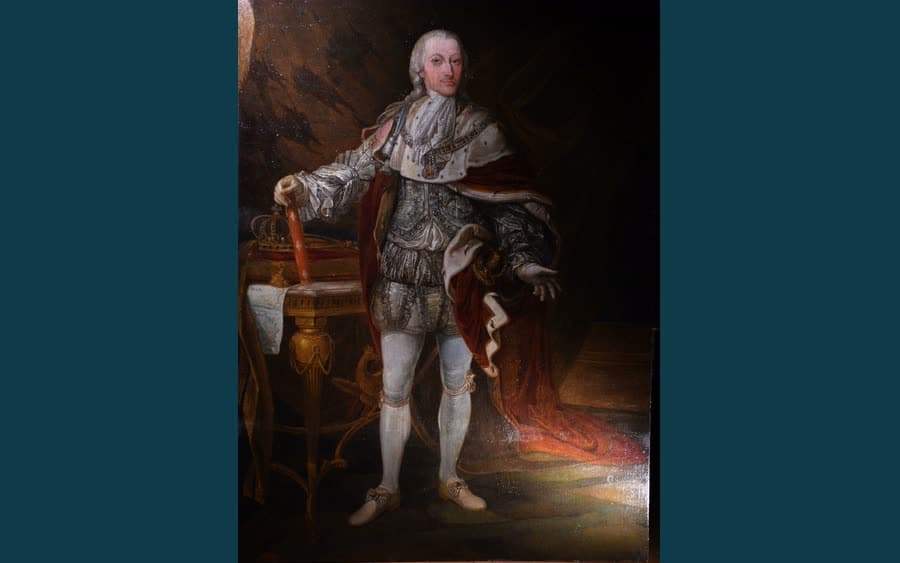
Victor Amadeus II, first king of Sardinia of the House of Savoy.Martin van Meytens / Wikimedia Commons, public domain From Spain to Savoy
After nearly four centuries in the Iberian orbit, Sardinia passed to the House of Savoy — and the official language began to change.
Full story
The handover came out of the treaties that wound up the War of the Spanish Succession. Turin brought Italian administration and Italian schooling, and Catalan slipped out of official life into kitchens and courtyards. Alghero kept its standing as a royal city with its own privileges, but the direction was set: over the following century the town became, on paper, Italian.
SourcesAlghero — Wikipedia (en)Città regie della Sardegna — Wikipedia (it)
- 11
1821
Hunger, then reprisal
A famine year ended in revolt on the streets of Alghero, and the revolt was put down with blood.
Full story
The early 19th century in Sardinia was a run of failed harvests, grain speculation and taxes collected regardless. Alghero rose in 1821 and the repression that followed was severe. The episode belongs to a wider island pattern — the same decades brought the enclosure laws that fenced off common land and pushed people off it.
SourcesAlghero — Wikipedia (en)Alghero 1901, piazze, vie, chiese e monumenti — Storie di Alghero
- 12
1847–1861
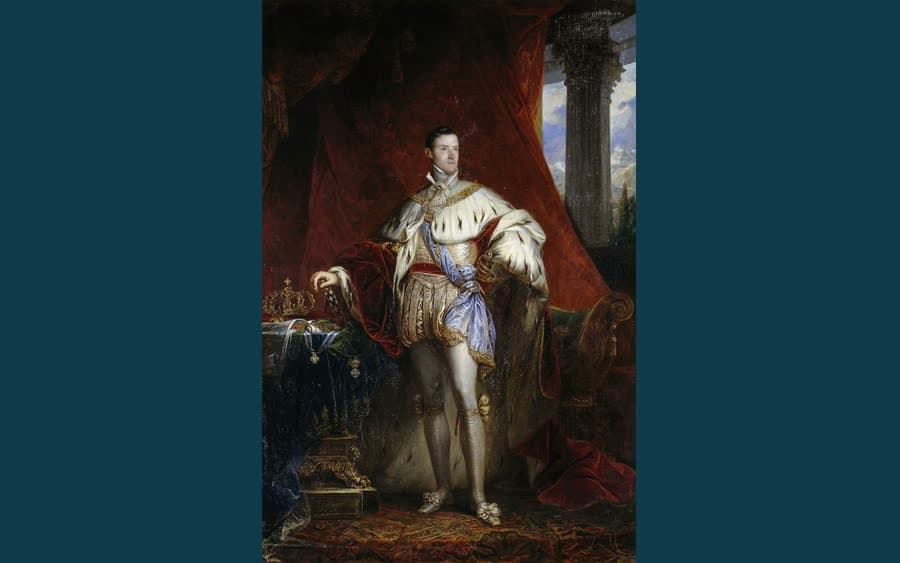
Charles Albert of Savoy, who signed the fusion of 1847.Ferdinando Cavalleri / Wikimedia Commons, public domain How Alghero ended up in Italy
Nobody joined anything. The Kingdom of Sardinia gave up its own institutions, and then the same state renamed itself Italy.
Full story
On 29 November 1847 Charles Albert granted the “perfect fusion” that part of the island's own elite had asked for: Sardinia's parliament and its separate legal order were dissolved into the mainland Savoy states, under a single capital in Turin. Fourteen years later that state, enlarged by the wars of unification, was proclaimed the Kingdom of Italy on 17 March 1861. Alghero became Italian by this constitutional route — no conquest, no plebiscite, no date on which the town changed hands.
SourcesFusione perfetta del 1847 — Wikipedia (it)Regno di Sardegna (1847-1861) — Wikipedia (it)
- 13
1867
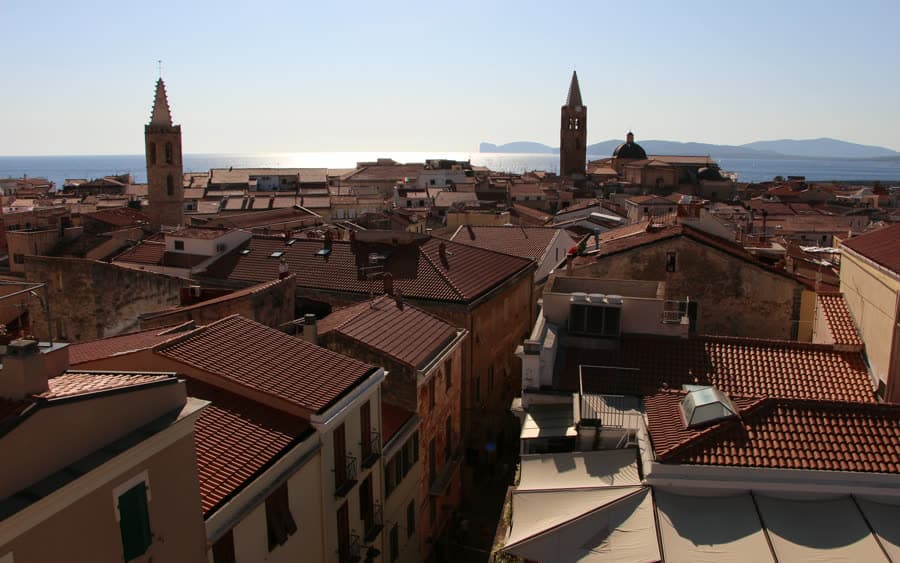
Torre di Porta Terra, the only surviving piece of the landward wall.Sailko / Wikimedia Commons, CC BY 3.0 The walls come down
A royal decree struck Alghero off the list of fortresses. The landward walls were dismantled; the sea walls became a promenade.
Full story
The decree of 25 April 1867 ended the town's fortress status, though demolition had already started in the 1850s and 1860s. The entire landward circuit went, and the Torre di Porta Terra is all that survives of it. On the sea side the bastions were kept and planted with trees. The walk along the ramparts that visitors take today is the by-product of a military decision to stop defending the town.
SourcesTorre di Porta Terra — Comune di AlgheroLe fortificazioni — Musei di Alghero
- 14
1936
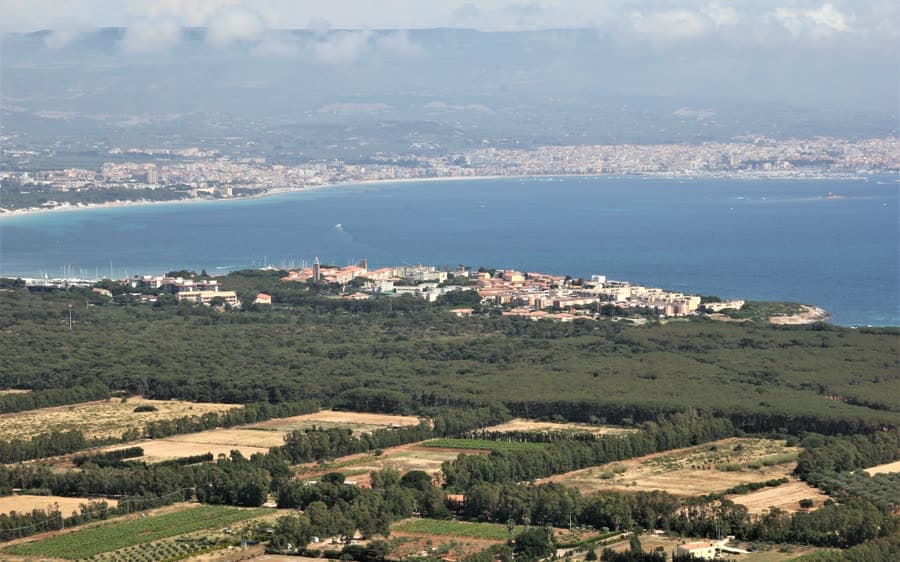
Fertilia, the 1930s new town on the bay north of Alghero.Gianni Careddu / Wikimedia Commons, CC BY-SA 4.0 Fertilia: two arrivals
A new town on drained marshland, settled first by farmers from Ferrara and then by refugees from Istria and Dalmatia.
Full story
The Nurra plain behind Alghero was malarial marsh; a Ferrara-based colonisation body took on 6,452 hectares of it in 1933 and Fertilia was inaugurated in 1936, laid out like the other new towns of the regime. The war cut the project short. From 1947 the half-finished village took in Italian exiles from Istria, Fiume and Dalmatia — more than 500 arrived between 1948 and 1952 — and their surnames are still on the shopfronts.
SourcesFertilia — Storie di AlgheroFertilia, l'ultima spiaggia dei giuliano-dalmati — East Journal
- 15
1940–1945
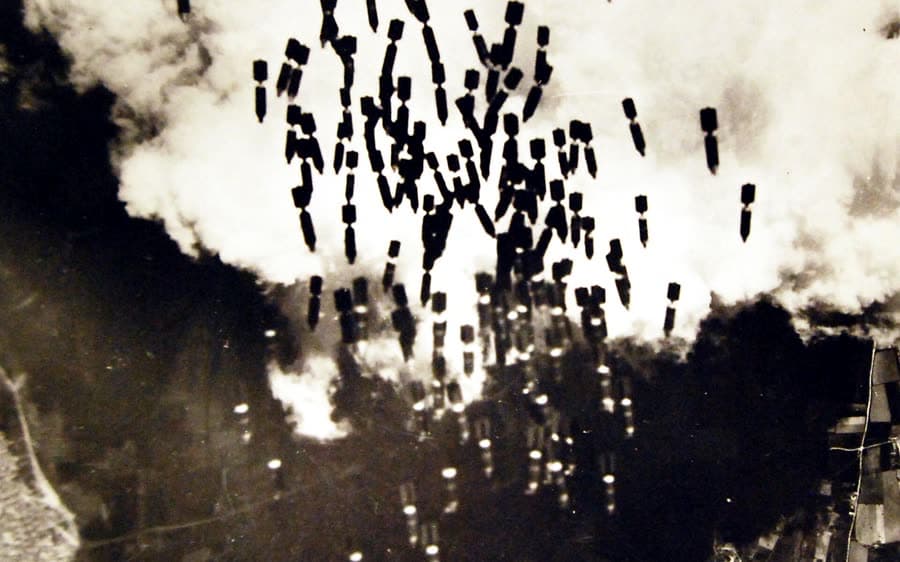
Bombs falling on Monserrato airfield near Cagliari, 1943 — the same campaign, at the other end of the island.National Museum of the U.S. Navy / Wikimedia Commons, public domain The war on the island
Sardinia's airfields made it a target, and Alghero paid for the one built beside it. The land war never came.
Full story
From 1943 the raids came in earnest on the island's ports and air bases; Cagliari lost about three quarters of its built fabric. Alghero's night was 17 May 1943: around 22:50 the bombers aimed at the airfield outside town and hit the centre, killing more than 160 civilians, destroying over 500 houses and damaging some 2,000, the cathedral among them. The town still calls it la Nit de Sant Pasqual. After the armistice of 8 September the German division on Sardinia pulled north and shipped out to Corsica by 17 September, so no ground fighting followed — but Alghero was left with rubble and years without roofs.
Sources17 maggio 1943, la notte che distrusse Alghero — Alghero EcoAlghero ricorda i bombardamenti — La Nuova SardegnaStoria della Sardegna contemporanea — Wikipedia (it)
- 16
1946–1960s
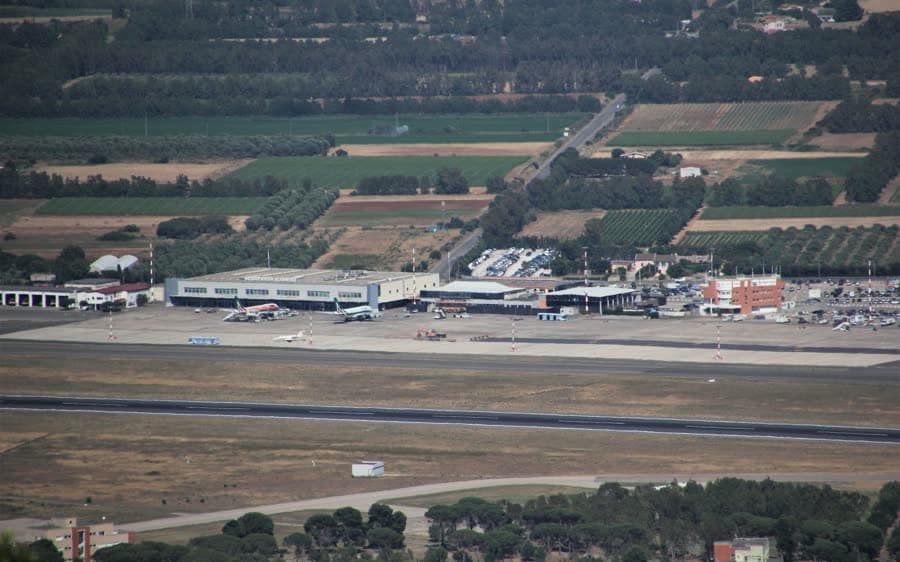
Alghero-Fertilia airport, grown out of the airfield of the 1940s.Gianni Careddu / Wikimedia Commons, CC BY-SA 4.0 DDT, then the first tourists
The anti-malaria campaign made the coast liveable in summer, and the airfield bombed in 1943 became the airport that brought visitors.
Full story
ERLAAS, funded by the Italian state, the Rockefeller Foundation and postwar aid, began spraying in April 1946. Sardinia counted 75,447 malaria cases that year and nine in 1951: the mosquito was never wiped out, but the disease was. What followed on this coast was hotels — and an airport at Fertilia that now handles the low-cost traffic of the whole north-west.
SourcesCinquant'anni senza malaria — Scienza in reteMalaria, DDT e americani in Sardegna — Informati Sardegna
- 17
August 1960
Lo Retrobament
A ship from Barcelona brought some 150 Catalans to Alghero — the first organised meeting between the town and Catalonia in centuries.
Full story
The Virginia de Churruca sailed on 25 August and lay two days off Alghero. The official purpose was to deliver an image of the Virgin of Montserrat, which is what made the trip acceptable to Franco's authorities; the actual content was two days of speeches, songs and recognition on both sides. In Catalonia the voyage became one of the founding stories of the 1960s revival.
SourcesViatge del retrobament. L'Alguer 1960 — Museu Marítim de BarcelonaLo Retrobament (1960) — Esguard Històric
- 18
1997 — today
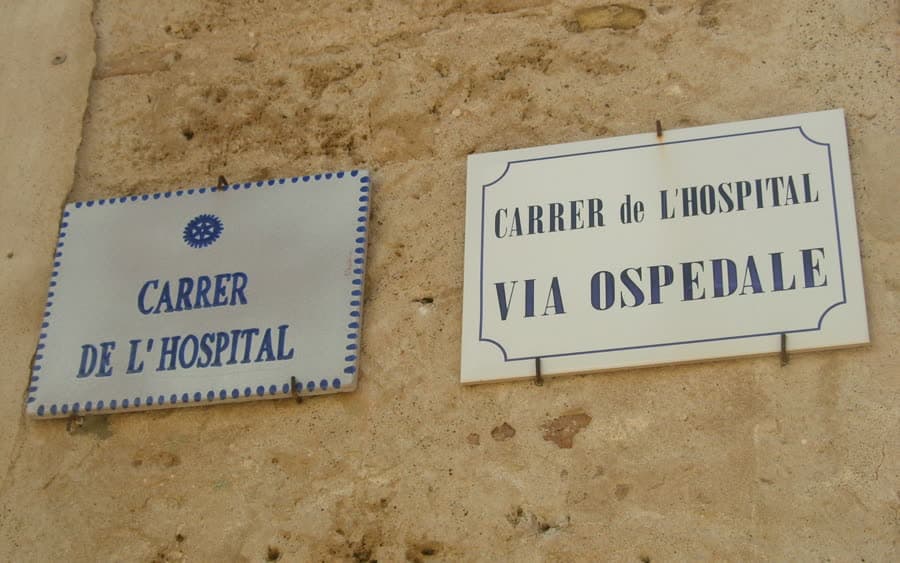
Street plaques in Alghero, in Italian and in Catalan.Enfo / Wikimedia Commons, CC BY-SA 3.0 A language with papers
Catalan has official recognition in Alghero, street signs in two versions, and about a quarter of the town speaking algherese as a first language.
Full story
Sardinian regional law came first, in 1997; the Italian law on historical linguistic minorities followed in 1999. Surveys put algherese at roughly 24% of residents as a mother tongue — fewer than a century ago, more than most minority languages manage. The plaques on the street corners carry both names, which is the shortest summary of the six thousand years above: what came here by sea, stayed.
SourcesAlghero — Wikipedia (en)Perché ad Alghero si parla catalano? — Geopop