AlgheroWhat to see · Què veure
In the old town
Dins les muralles · 40.56° N 8.32° E
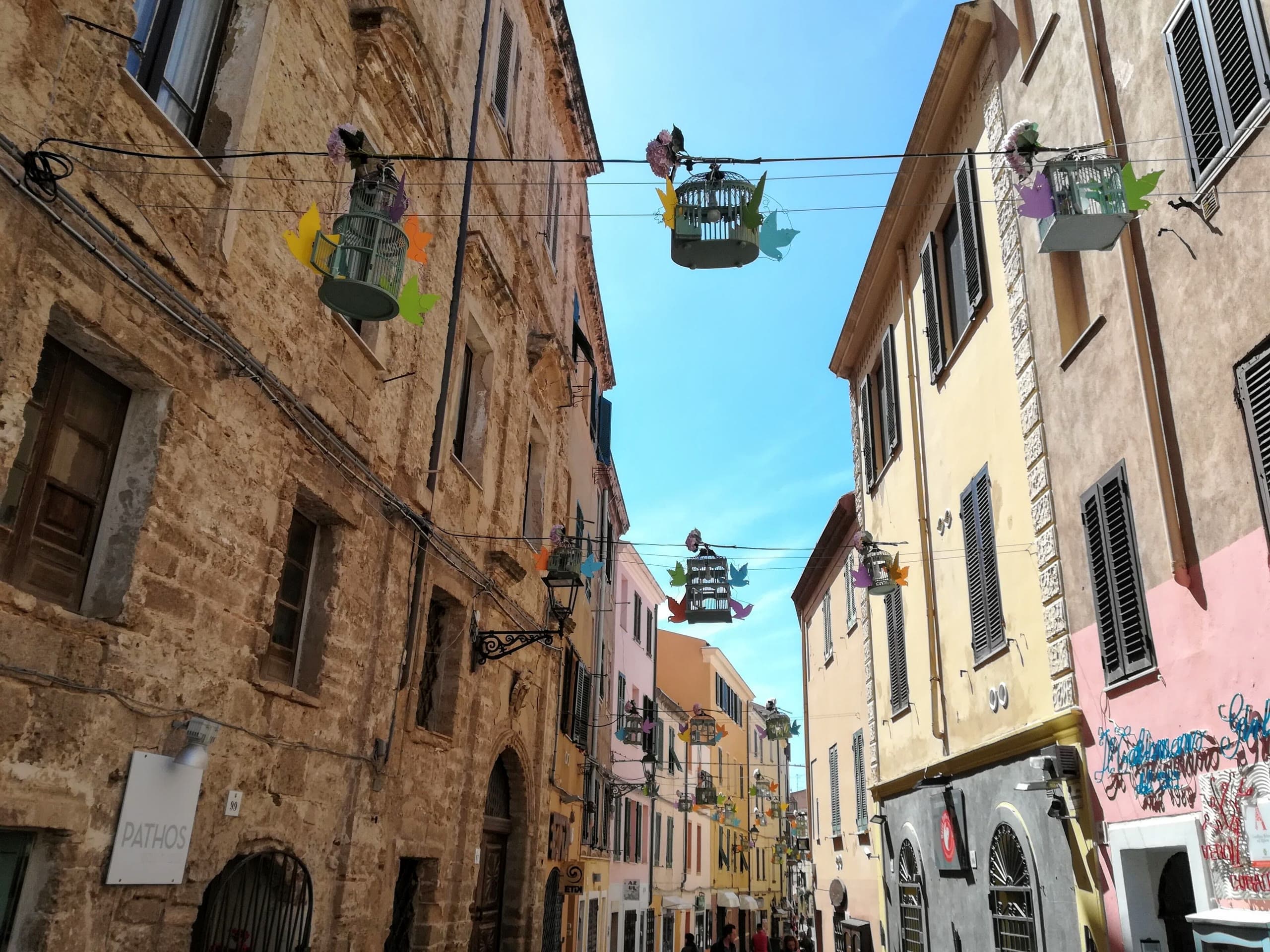
Alghero keeps its whole historic centre inside a ring of sixteenth-century walls, and you can cross it in fifteen minutes. Everything on this page is in the city itself — the cathedral, the churches, the towers, the bastions above the sea. Capo Caccia, Neptune's Grotto and the nuraghi are a drive away and get their own page.
Photo Mattambo / Wikimedia Commons, CC BY-SA 4.0
Four corners of the city
Everything below is inside Alghero and walkable. What lies beyond the city — Capo Caccia, Neptune's Grotto, the nuraghe at Palmavera, the necropolis of Anghelu Ruju — is on the day trips page.
01Inside the walls
Inside the walls
The historic centre is a grid of narrow lanes in sandstone, laid out under the Catalans and never widened since. Almost everything worth stopping for sits within four or five streets of the cathedral: three churches, a square with a story, the last land gate and two museums.
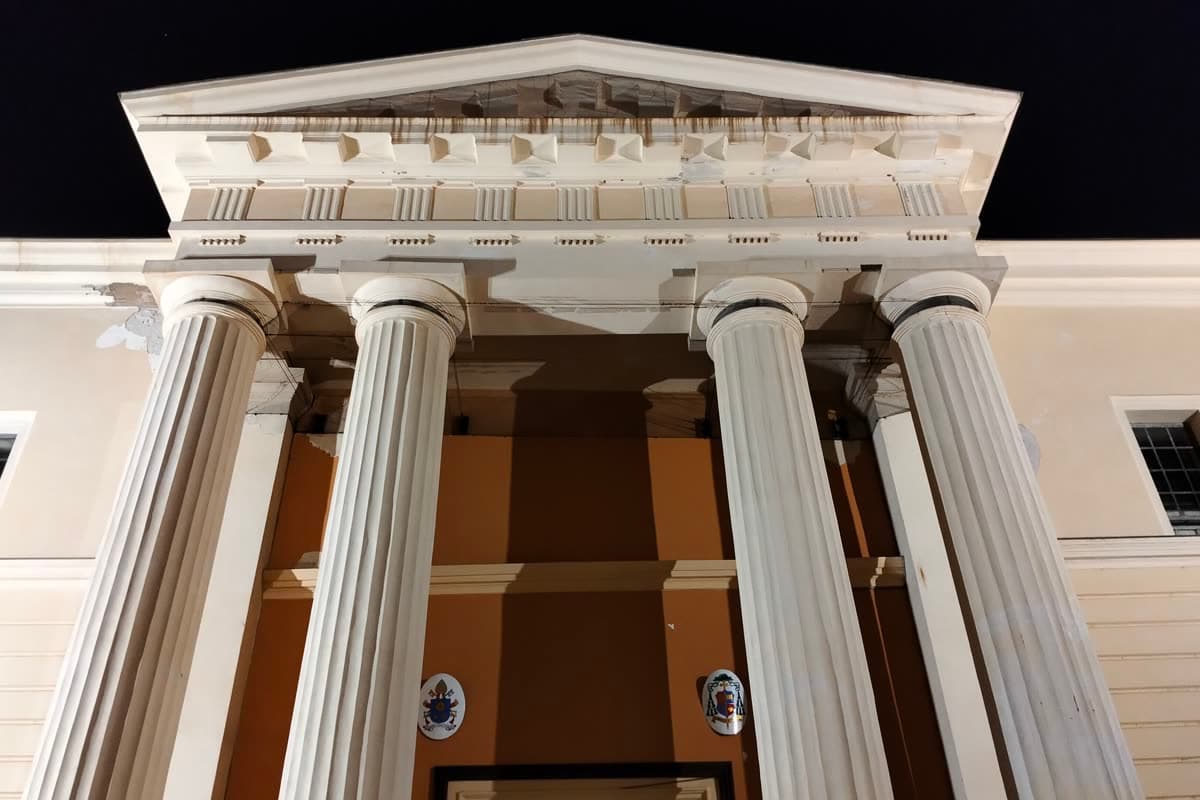
Cattedrale di Santa Maria
Catedral de Santa Maria
The Catalan-Gothic cathedral of Alghero, with an octagonal bell tower that is the shape everyone photographs from the bastions.
More about this place
Work began in 1530, after the diocese of Alghero-Bosa was created in 1503 and the town found itself without a cathedral. The base is Catalan Gothic, modelled on Santa Eulàlia in Barcelona; it was consecrated in 1593 while still unfinished, and the transept and its octagonal dome followed in 1638. The front you see from the square is much later — a Doric portico of 1820 and a neoclassical facade of 1862 — so the building reads as two centuries stacked on top of each other. The bell tower kept the Catalan idea: an octagonal shaft under a pyramid of polychrome majolica.
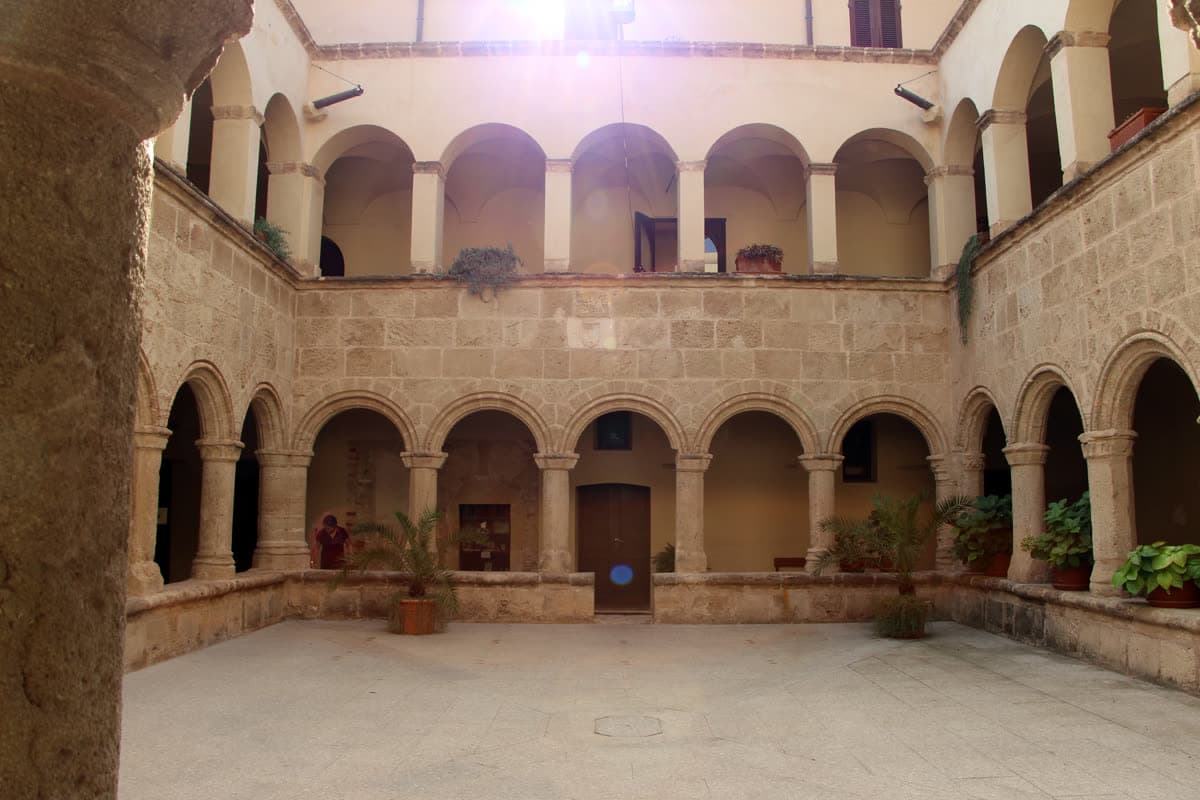
Chiesa di San Francesco
A fourteenth-century Franciscan church whose cloister is the quietest place inside the walls.
More about this place
The Franciscans arrived in the fourteenth century and the church was built in 1380, then rebuilt in Catalan Gothic during the fifteenth. Behind the sacristy is the cloister, on two levels: twenty-two sandstone columns below, from the sixteenth century, and an eighteenth-century gallery above. In summer it becomes a concert venue. Inside the church, on the fourth pillar on the left, stands the wooden Christ at the Column that is carried through the streets during Holy Week.
LinksMapSardegnaTurismo
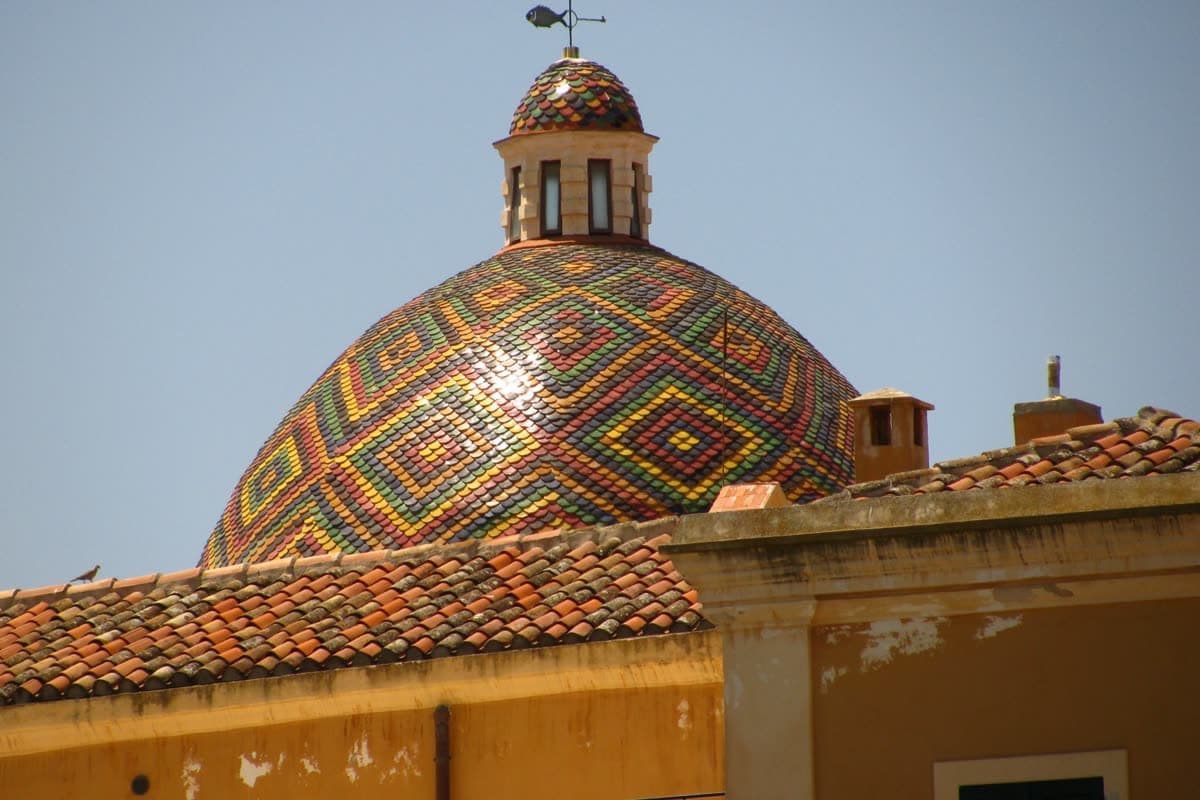
Chiesa di San Michele
The Baroque church of the town's patron saint — and the tiled dome that has become Alghero's shorthand.
More about this place
The church took its present shape from a rebuilding begun in 1612 and was handed to the Jesuits, who ran a college beside it until the order was dissolved in 1774 and the buildings became a barracks. The dome is the thing everyone knows: octagonal, on a high drum, covered outside in polychrome tiles. Those tiles are not Baroque — they were designed around 1950 by Antoni Simon Mossa, the architect of the Escala del Cabirol at Neptune's Grotto, together with the painter Filippo Figari.
LinksMapSardegnaTurismo
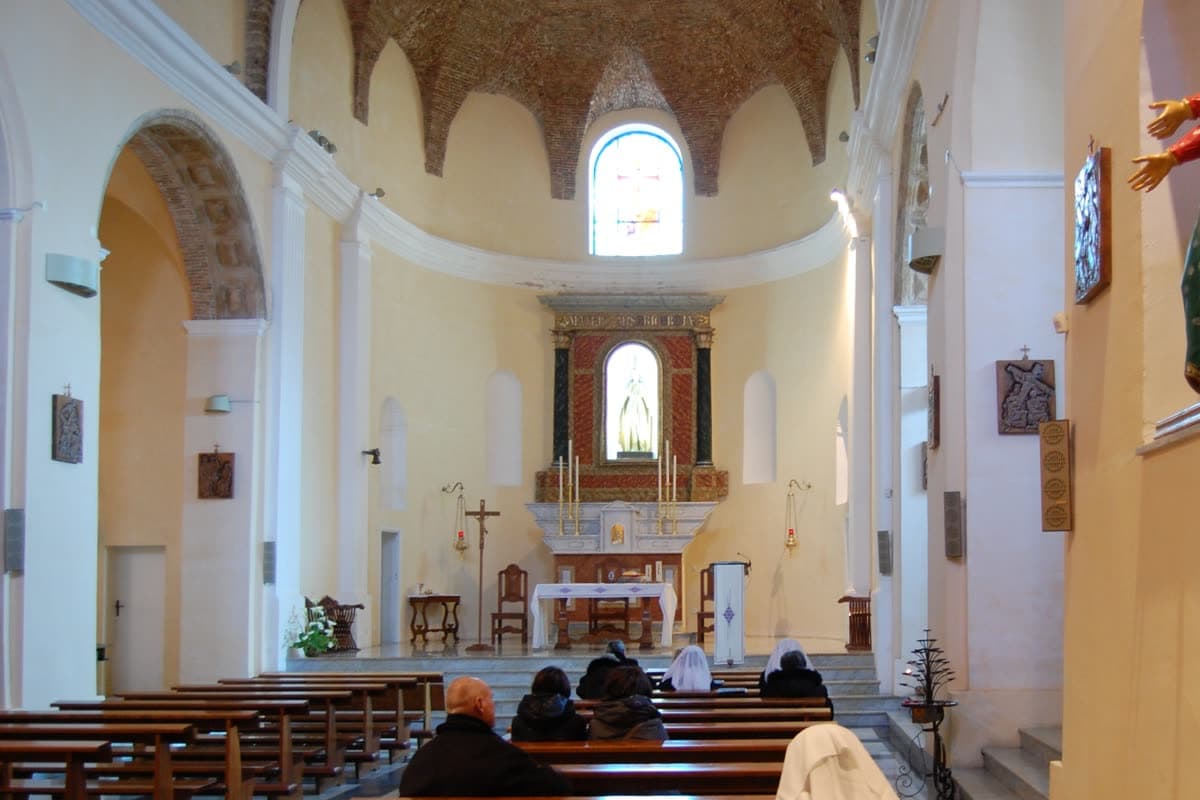
Chiesa della Misericordia
Església de la Misericòrdia
A small church off the main lanes, and the starting point of Alghero's Good Friday procession.
More about this place
The Misericordia belongs to the confraternity of the same name and is the working heart of the town's Holy Week, the rite Alghero has kept in the Catalan tradition since the end of the sixteenth century. It is a plain interior compared with the cathedral, which is rather the point: the building exists for one week of the year, when the Desclavament — the deposition from the cross — is staged inside it and the procession leaves from its door.
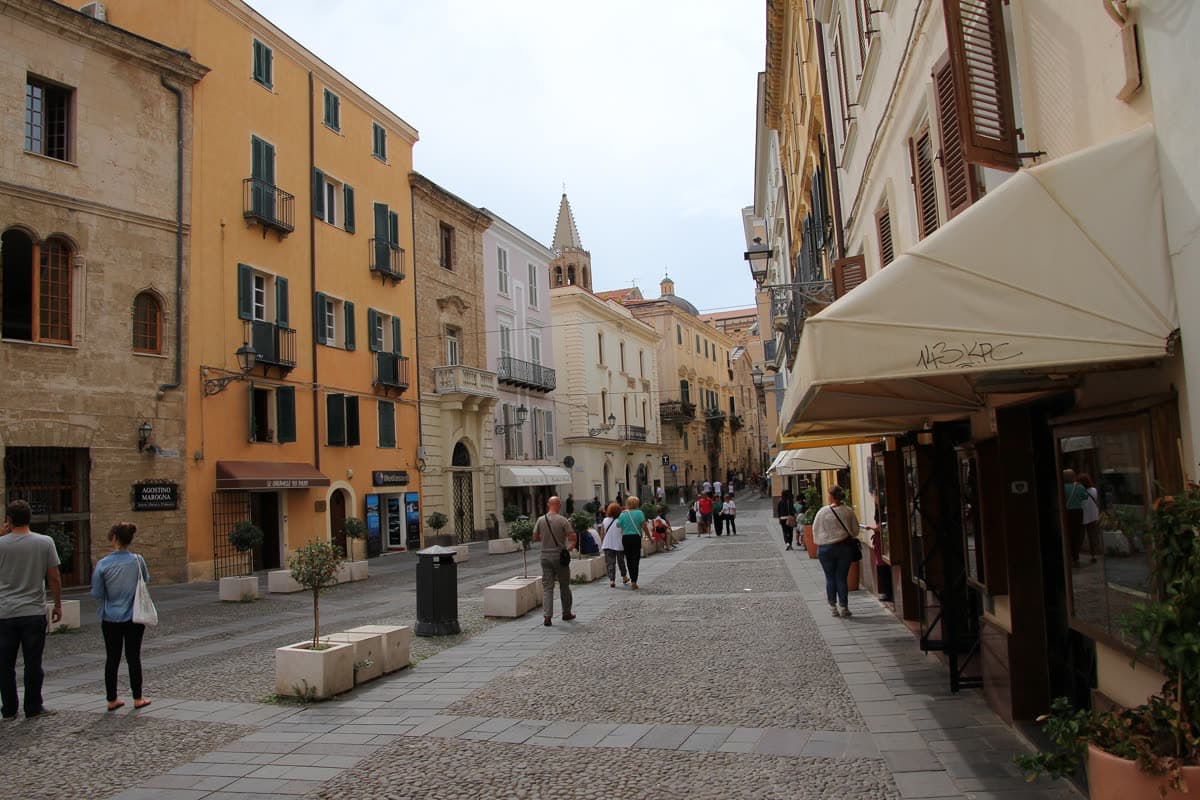
Piazza Civica
Plaça del Pou Vell
The old town's main square, named after the well that used to stand in it, and the address of the Charles V story.
More about this place
This was the civic centre of Catalan Alghero, and it still carries its Catalan name, Plaça del Pou Vell — the square of the old well. Palazzo d'Albis, also known as Casa de Ferrera, stands on it: the building where, according to local tradition, Charles V stayed on 7–8 October 1541 on his way to Algiers and addressed the townspeople as “todos caballeros”. Treat that as a story rather than a fact — the historian Giuseppe Manno described the visit at length and never mentioned it.
LinksMapStorie di Alghero
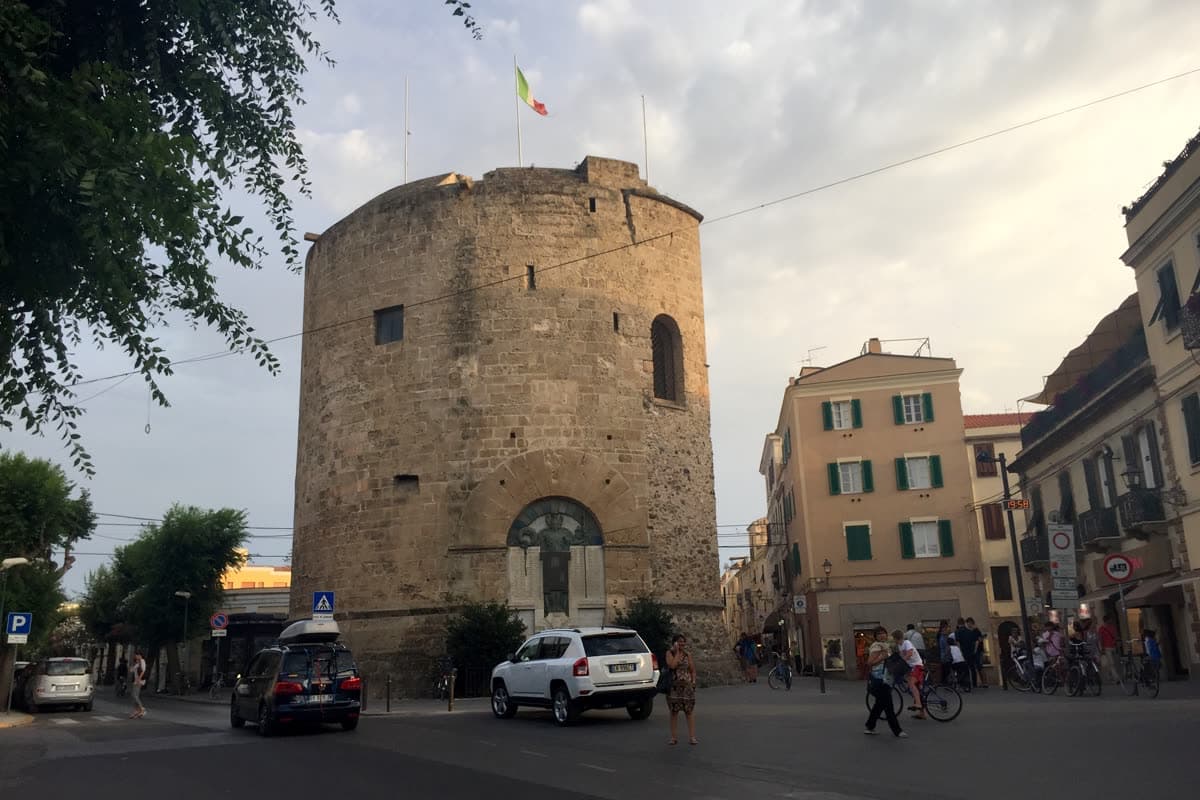
Torre di Porta Terra
The only tower left from the land walls, and once the gate that was locked every night.
More about this place
Built in the fourteenth century with money from the town's Jewish community — which is why it is also called the Torre degli Ebrei — it was originally the Porta Reial, the main entrance from the Sassari road, closed at dusk and opened at dawn. When the fortress status ended by decree in 1867 and the landward walls came down, this tower was left standing alone. It now holds a tourist information point, and the square around it is where the Christmas market opens each November.
Complesso Lo Quarter
A former Jesuit college turned barracks turned cultural centre, and the town's main venue for concerts and exhibitions.
More about this place
Lo Quarter takes its name from its longest job: after the Jesuits were dissolved in 1774 the complex became a military quarter, and it stayed one for most of two centuries. Restored and reopened as a cultural centre, it is now where a good part of the town's public life happens — exhibitions through the year, and the stage for concerts during the Sant Miquel festival at the end of September and for parts of the JazzAlguer season.
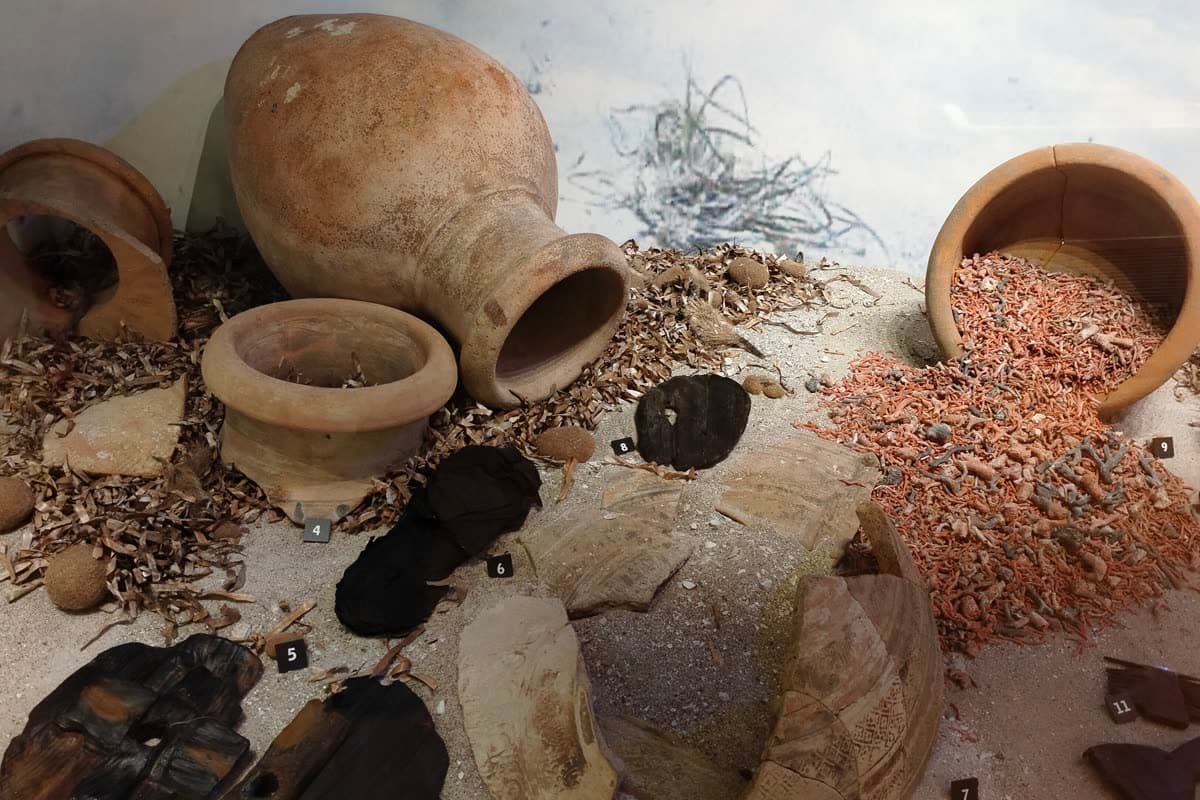
Museo Archeologico della Città
MASA
The city's archaeological museum, telling the story of this coast from the nuragic villages to the Roman harbour.
More about this place
MASA opened in the old town and gathers what has come out of the ground around Alghero: material from the nuragic village at Palmavera, from Sant'Imbenia in the bay of Porto Conte — where Phoenician and Greek pottery among the oldest in the western Mediterranean was found — and from the Roman villa on the same bay. It is the place to come before or after driving out to those sites, because the objects are here and the walls are there.
02On the bastions
On the bastions
The sea walls survived the demolition of 1867 and were planted with trees instead. Today they are the town's promenade — a raised walk along the water with the surviving towers standing on it, and the best light in Alghero an hour before sunset.
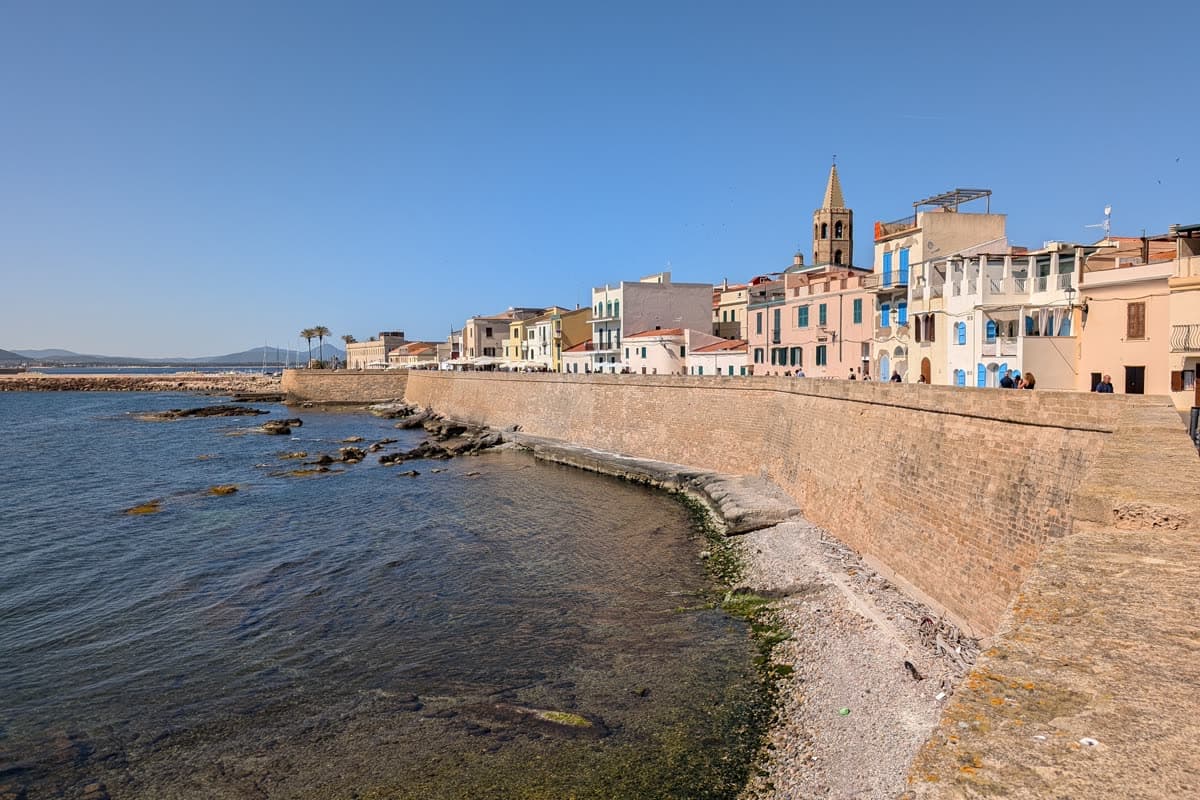
Mura e bastioni
Sixteenth-century sea walls turned into a promenade, and the best walk in town.
More about this place
Ferdinand the Catholic made Alghero the second fortress of Sardinia in the sixteenth century, with a full ring of walls and towers. The decree of 25 April 1867 ended that status; the landward walls were dismantled, but the seaward ones were kept and planted with trees. What is left is a raised terrace over the water, running from the Maddalena bastion round to Torre di Sulis, with cafés under the ramparts and the cathedral bell tower behind you.
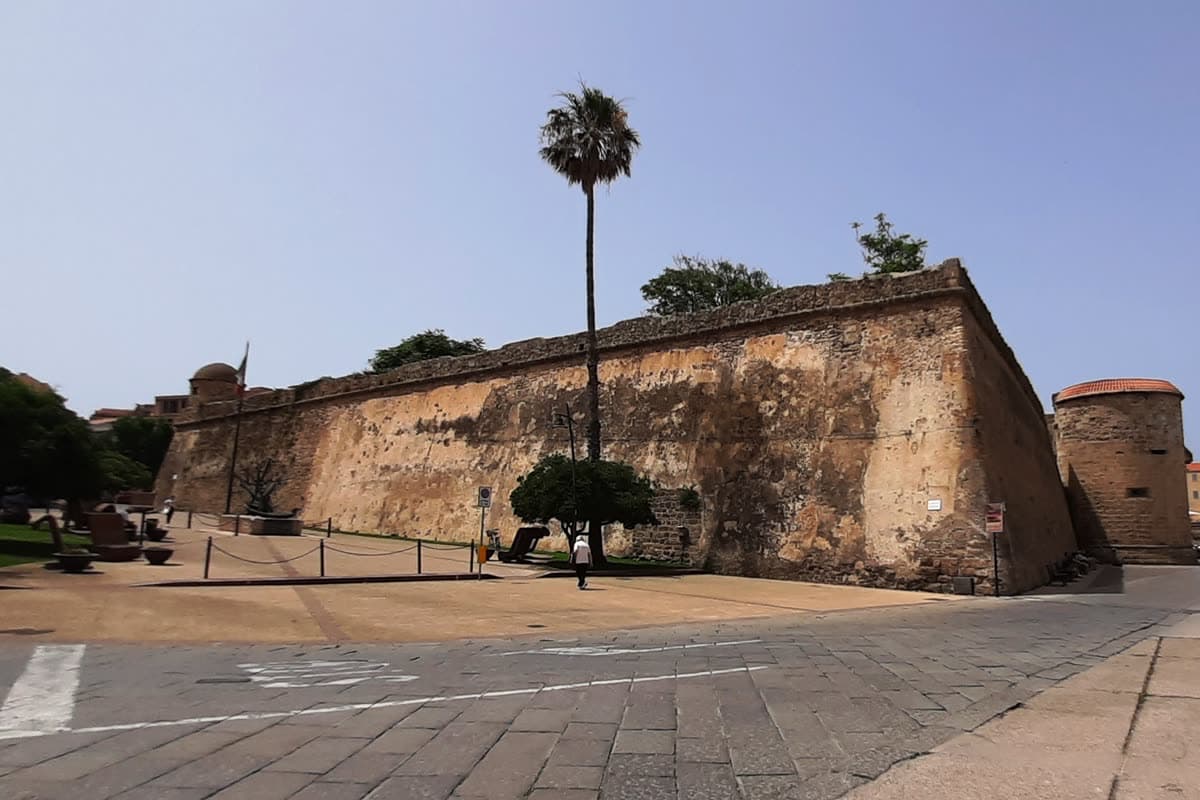
Bastione della Maddalena
The northern end of the ramparts, where the walls meet the harbour.
More about this place
The Maddalena bastion closes the circuit at its northern corner, where the fortifications turn inland towards the port. It is the quieter end of the promenade — a long low wall, a few palms, and a view back along the whole seaward front of the town. A plaque on the tower records Garibaldi's stay in Alghero.
LinksMapMusei di Alghero
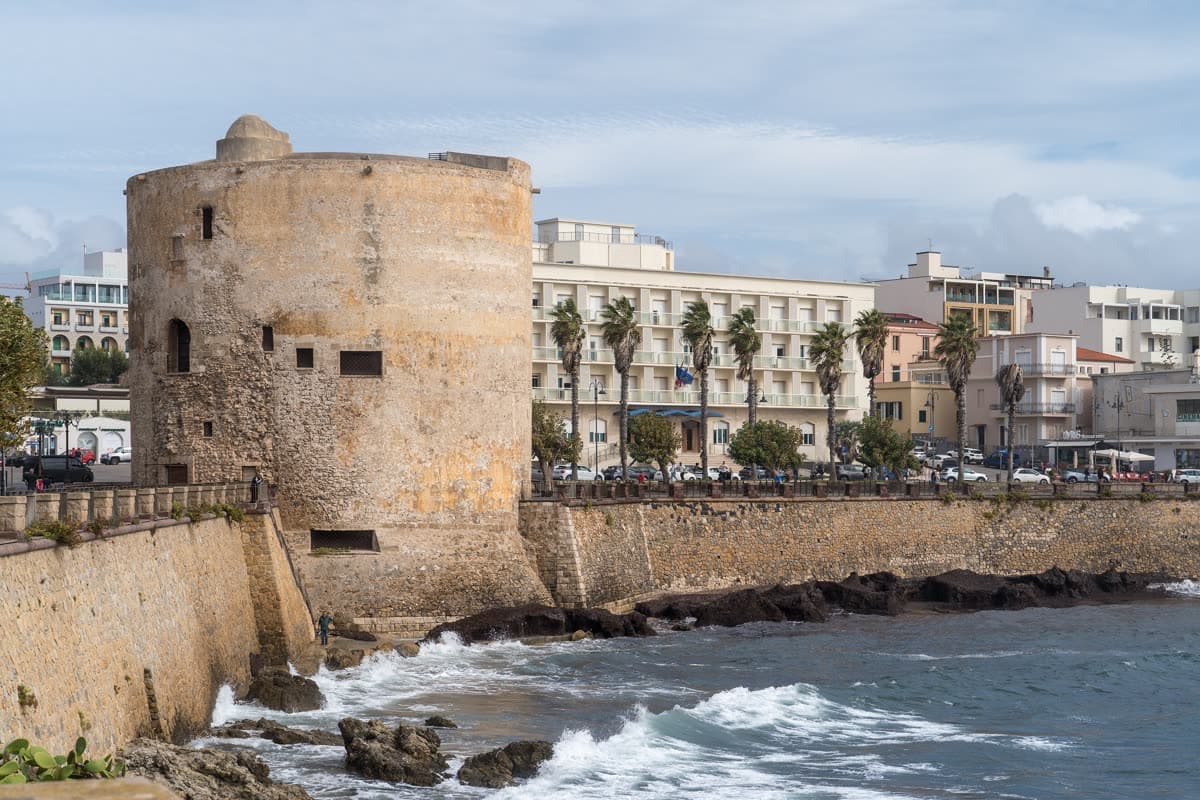
Torre di Sulis
Torres de l'Esperó Reial
The largest tower on the walls, with six metres of stone between you and the sea — and a prisoner who gave it his name.
More about this place
Built in the first half of the sixteenth century, the tower has walls fully six metres thick over three floors, high vaults on heavy stone ribs and a spiral stair connecting the levels. Its first name was Torre dello Sperone — Torres de l'Esperó Reial — after the spur of fortification beside it. It became Torre di Sulis in the nineteenth century, after Vincenzo Sulis, the Cagliari tribune held here from 1799 until his pardon in 1820. Two cannon recovered from a Spanish galleon wrecked offshore around 1500 stand beside it.
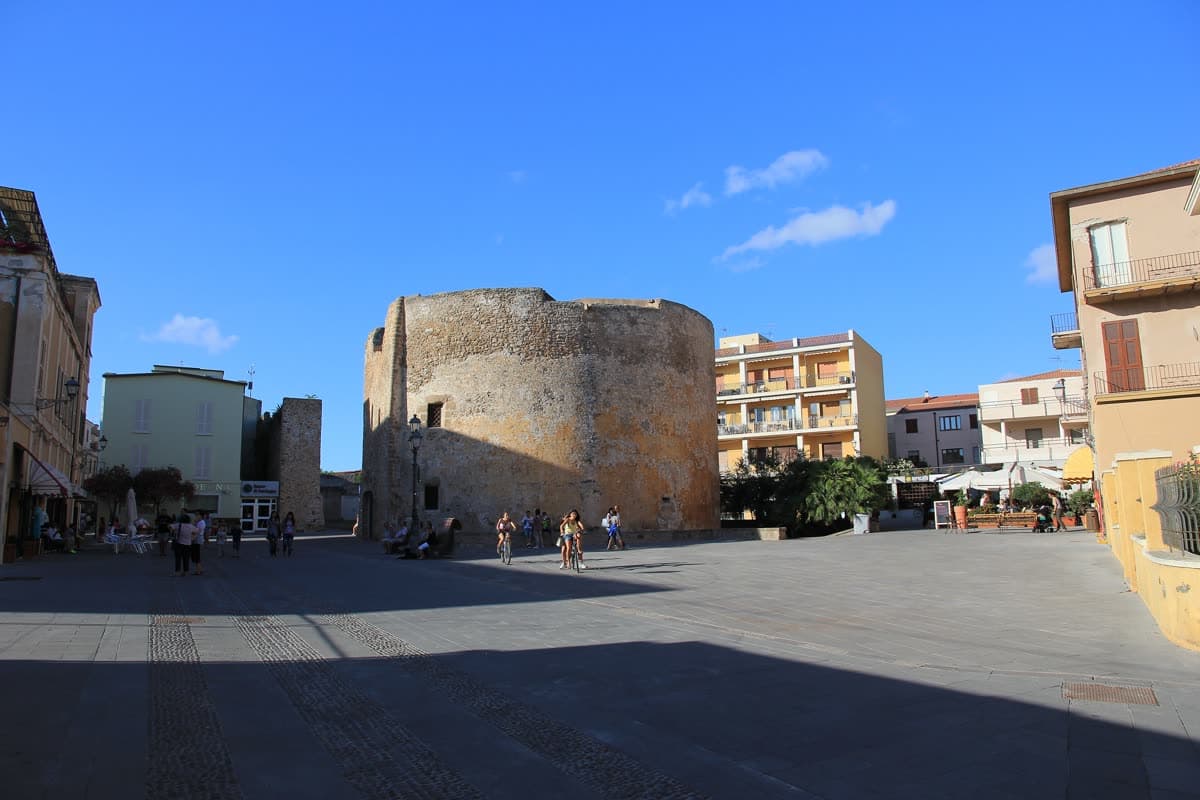
Torre di San Giovanni
A round sandstone tower on the old wall line, now an exhibition space you can walk into.
More about this place
Part of the sixteenth-century reorganisation of the defences, the tower measures about ten metres across and nearly sixty in circumference, with walls 4.30 m thick. It had three floors reached by an internal stair; two survive, under a barrel vault carried on heavy ribs arranged like the spokes of a wheel. The ground floor was given a new door when the walls around it came down, and is used for exhibitions.
03By the port
By the port
North of the walls the coast turns into a working harbour: fishing boats on one quay, yachts on the next, and the boats that leave for the cliffs of Capo Caccia. It is where the coral fleet came in for four centuries.
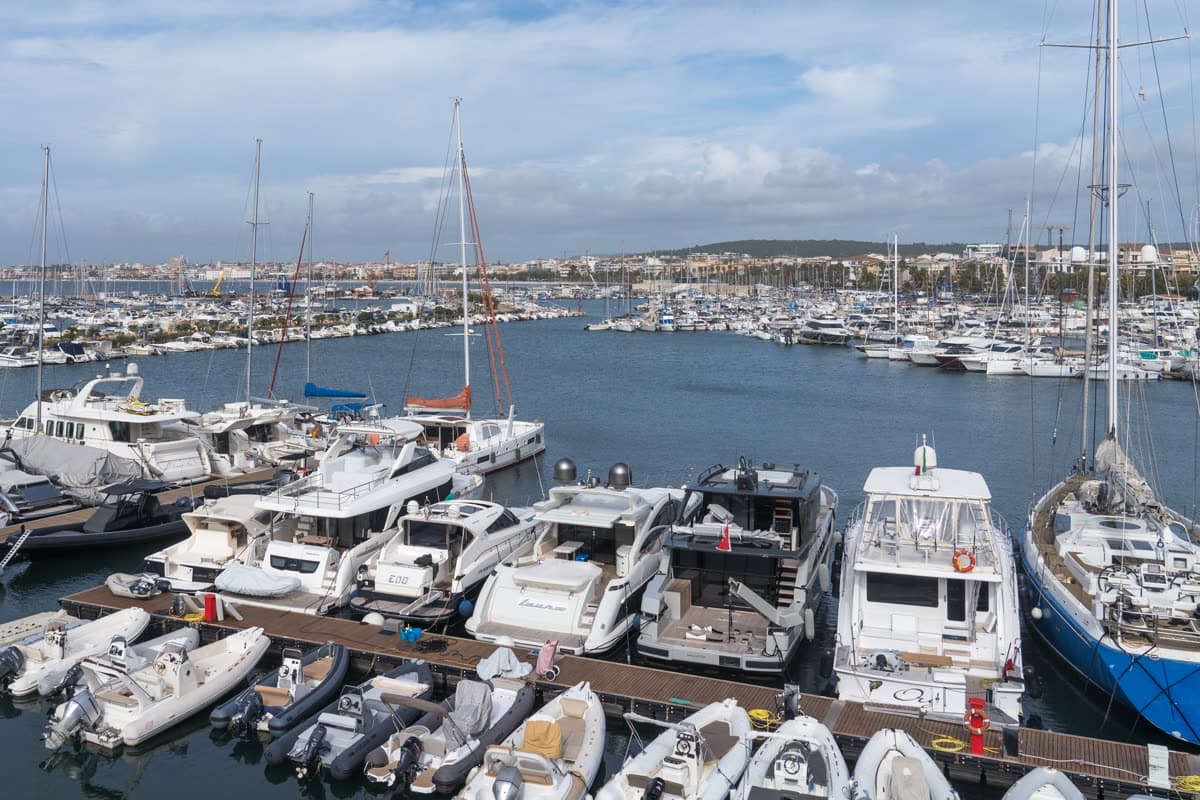
Porto di Alghero
Fishing boats, yachts and the departure quay for the cliffs — the town's working edge.
More about this place
The harbour runs north from the Maddalena bastion, and it still does two jobs at once: a fishing fleet on one side, a marina on the other. For four centuries this is where the coral boats landed their catch, the trade that gave the coast its name. Today it is also where the boats leave for Capo Caccia and Neptune's Grotto — the sea route that was the only way into the cave for about 150 years, until the Escala del Cabirol was cut into the cliff in 1954.
04Outside the walls
Just outside the walls
The town spread beyond its gates in the nineteenth and twentieth centuries. Two things out there are worth the extra ten minutes: the museum that explains why this coast is called the Coral Riviera, and a neo-Moorish villa on its own headland.
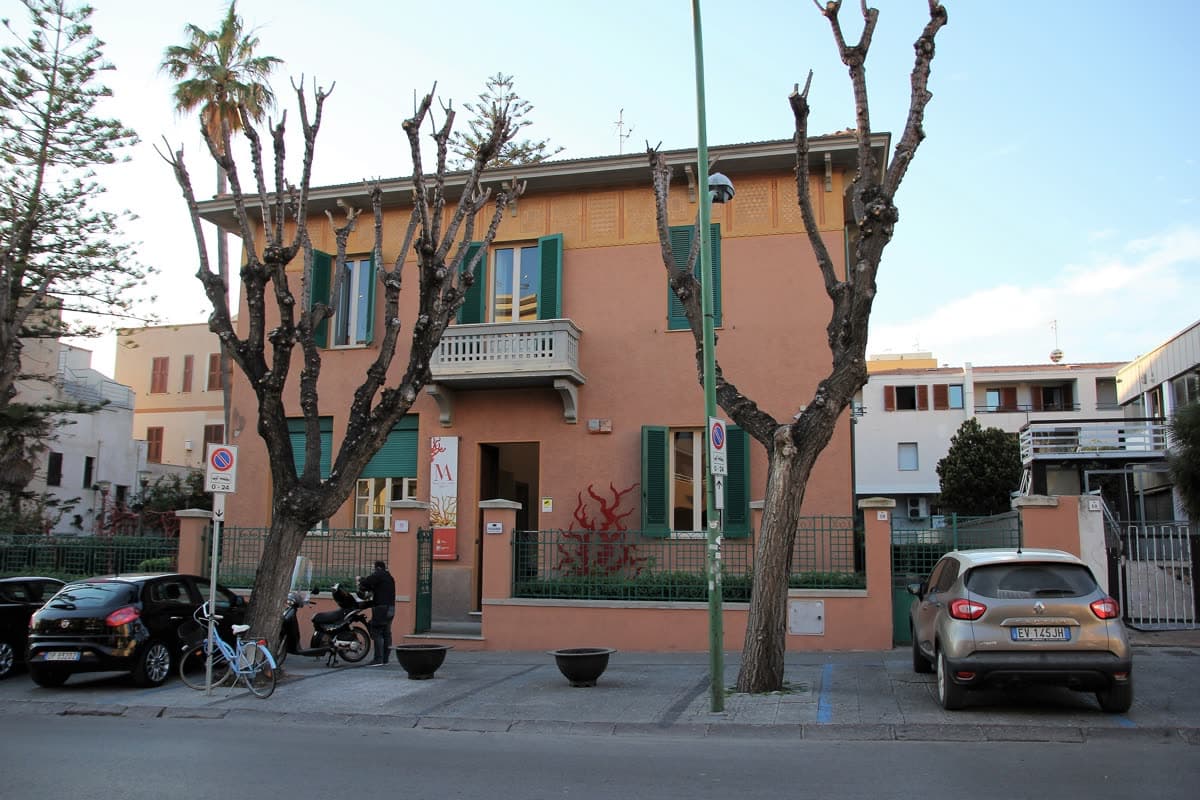
Museo del Corallo
Villa Costantino
Red coral, the thing this coast is named after, explained in an Art Nouveau villa.
More about this place
The museum sits in Villa Costantino, built in 1927 and kept as it was — a house that is itself part of the exhibition. What it explains is why Alghero is the capital of the Riviera del Corallo: Corallium rubrum grows on these seabeds between 30 and 200 metres down, it was the town's main business from the fourteenth to the eighteenth century, and a sprig of it sits in the municipal coat of arms. Workshops on the lanes of the old town still cut and set it.
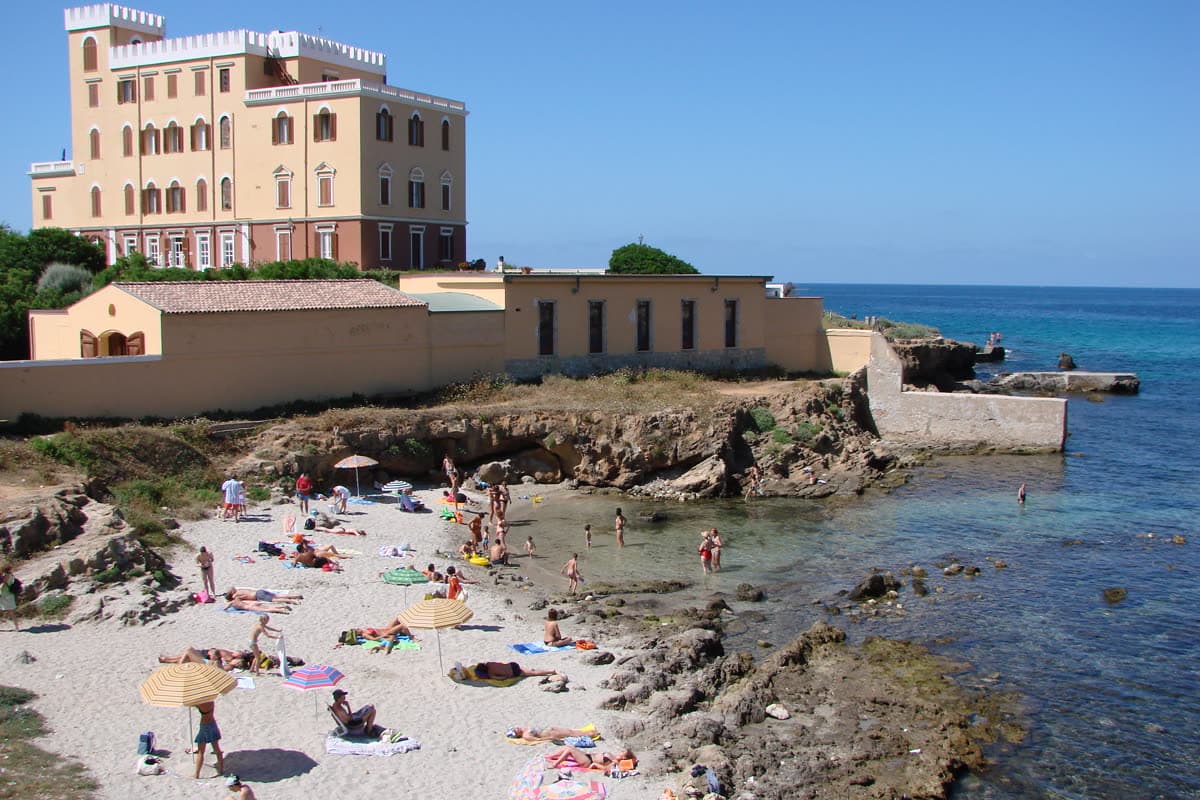
Villa Las Tronas
A neo-Moorish villa on its own small headland, a kilometre south of the walls.
More about this place
Built around 1880 on the ruins of an old watchtower, Villa Las Tronas was the summer residence of Victor Emmanuel III and Queen Elena until the 1940s, and has been a hotel since 1961. The name comes from two cylindrical rocks below it shaped like thrones. You cannot go in unless you are staying, but the headland is public: the walk out along Lungomare Valencia, past the two small coves the villa divides, is worth the twenty minutes from the bastions.
Opening hours and tickets change with the season and are not repeated here — the official pages linked under each entry carry the current ones. Several of these buildings are still in use as churches, so visits pause during services.
Photos Gianni Careddu, Ottantafame, Sailko, naz84, Carlos Pino Andújar, Benoît Prieur, Basilicofresco, Alexkom000, Robert Ciekanowski, Gianfranco Mariano, Mattambo / Wikimedia Commons, CC0 / CC BY / CC BY-SA